


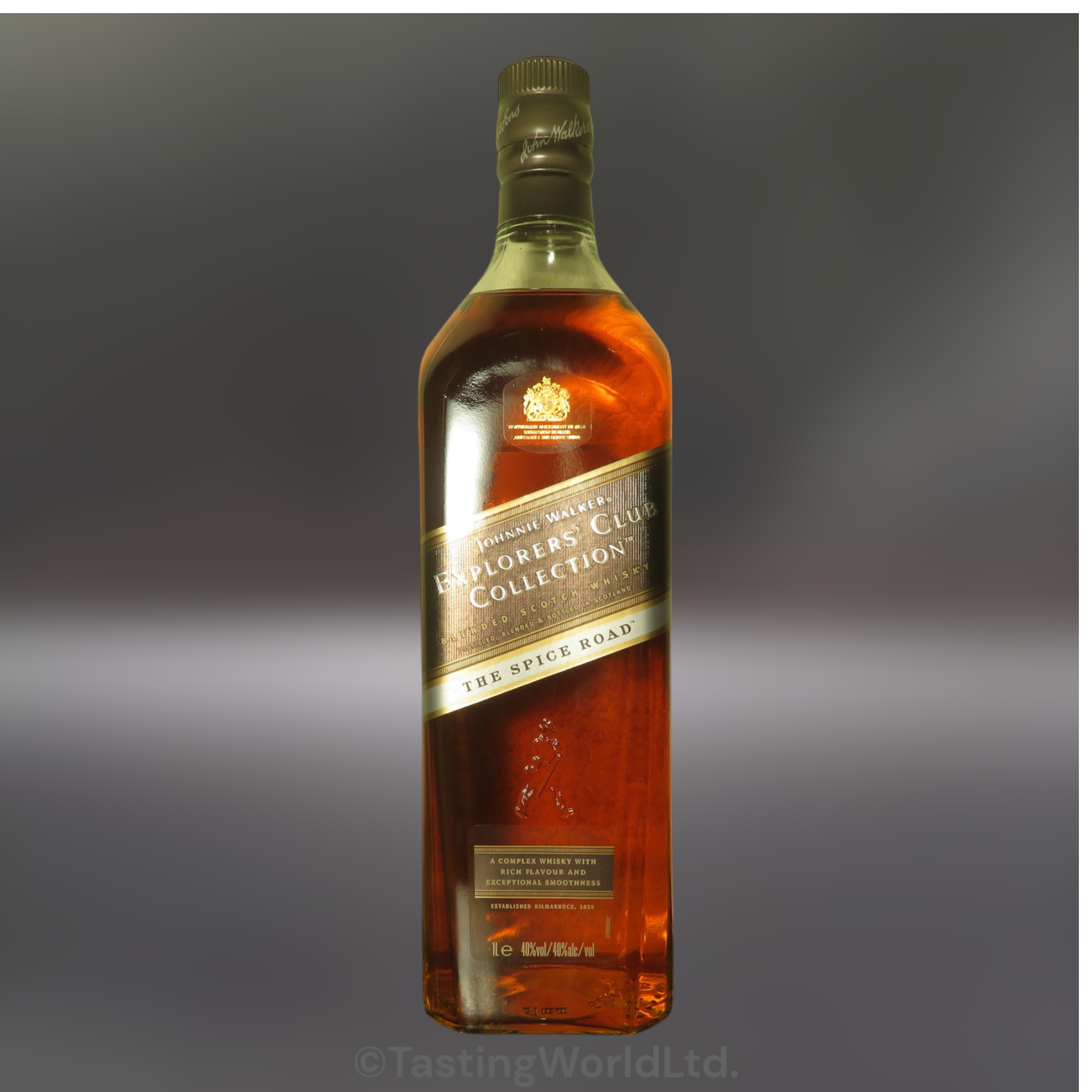
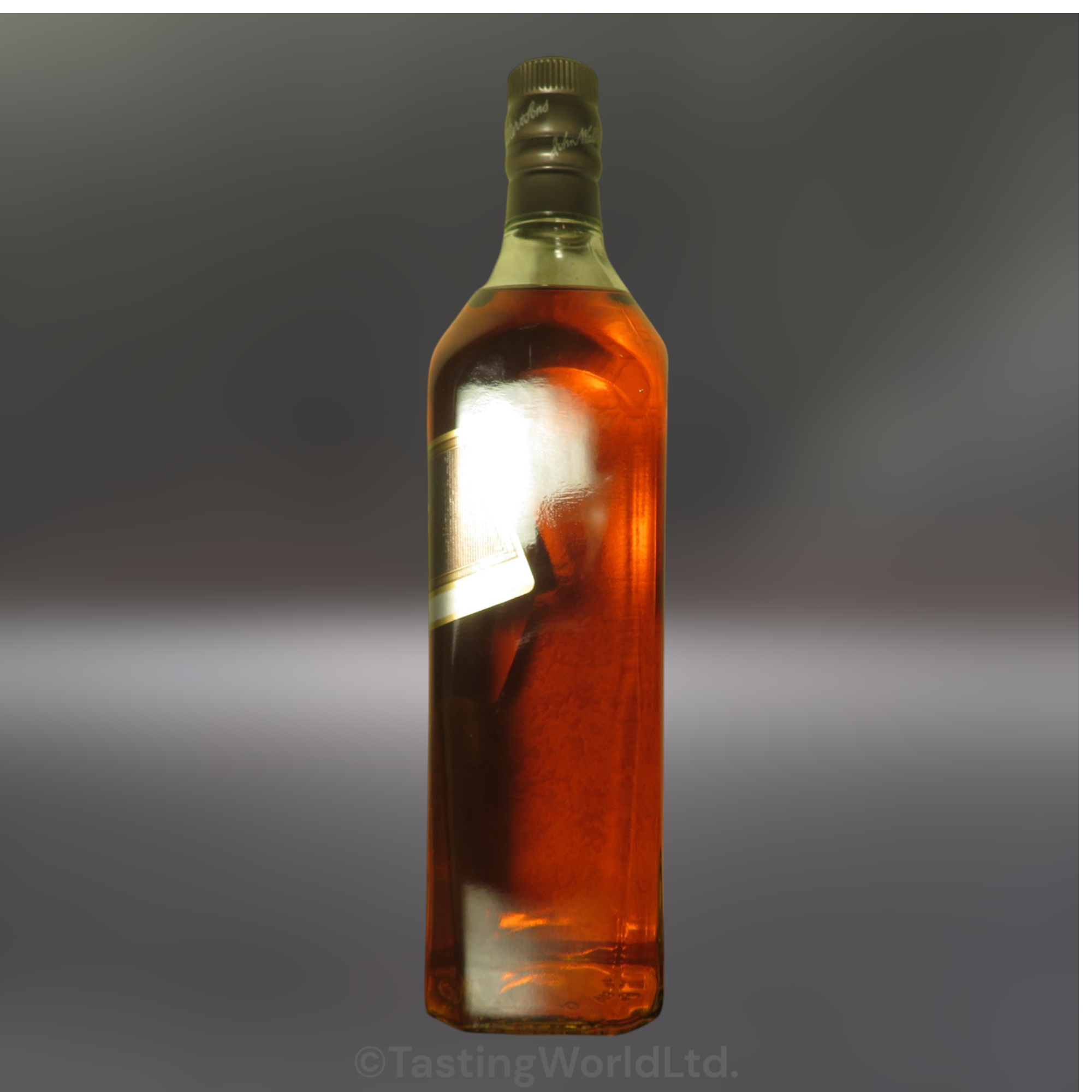
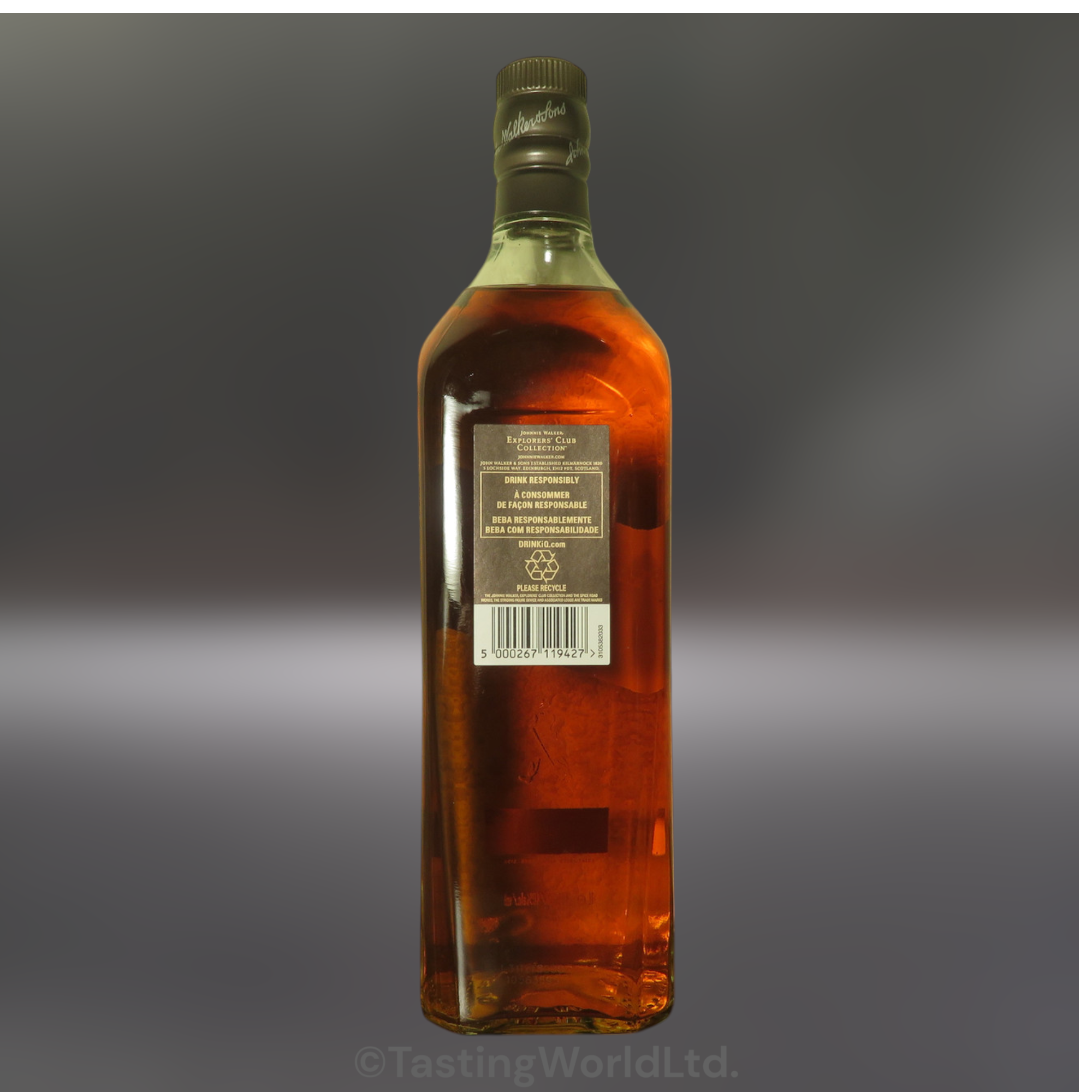
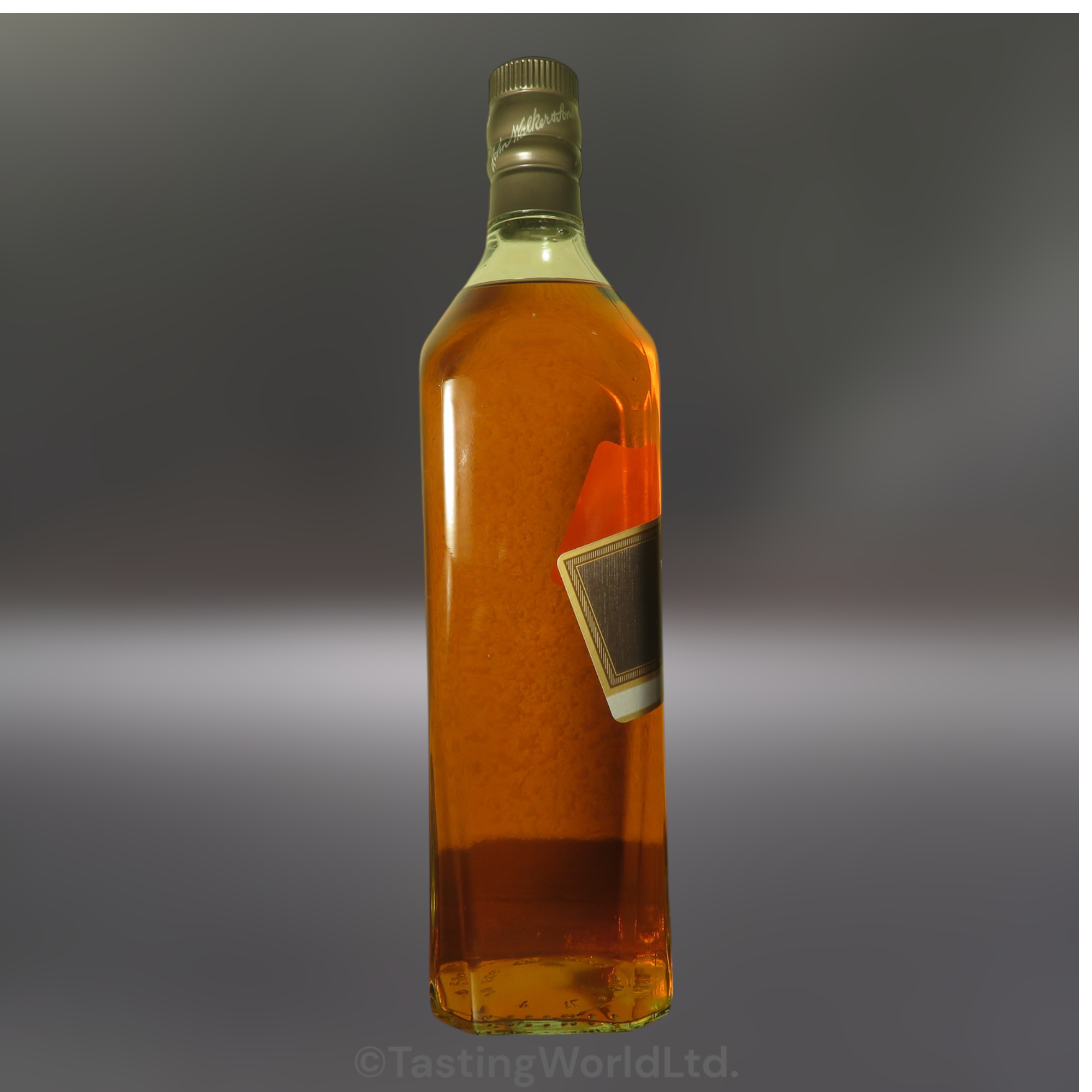
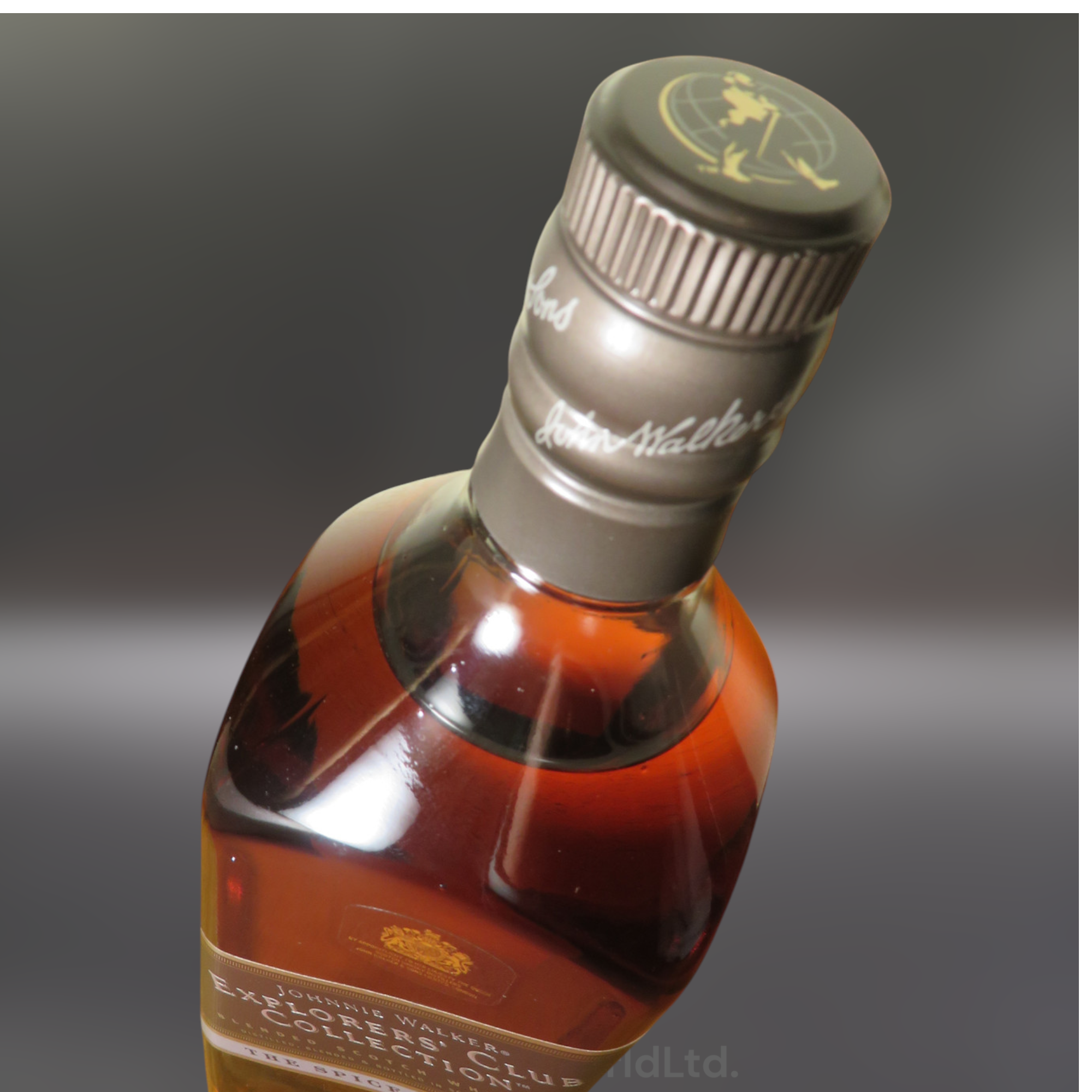
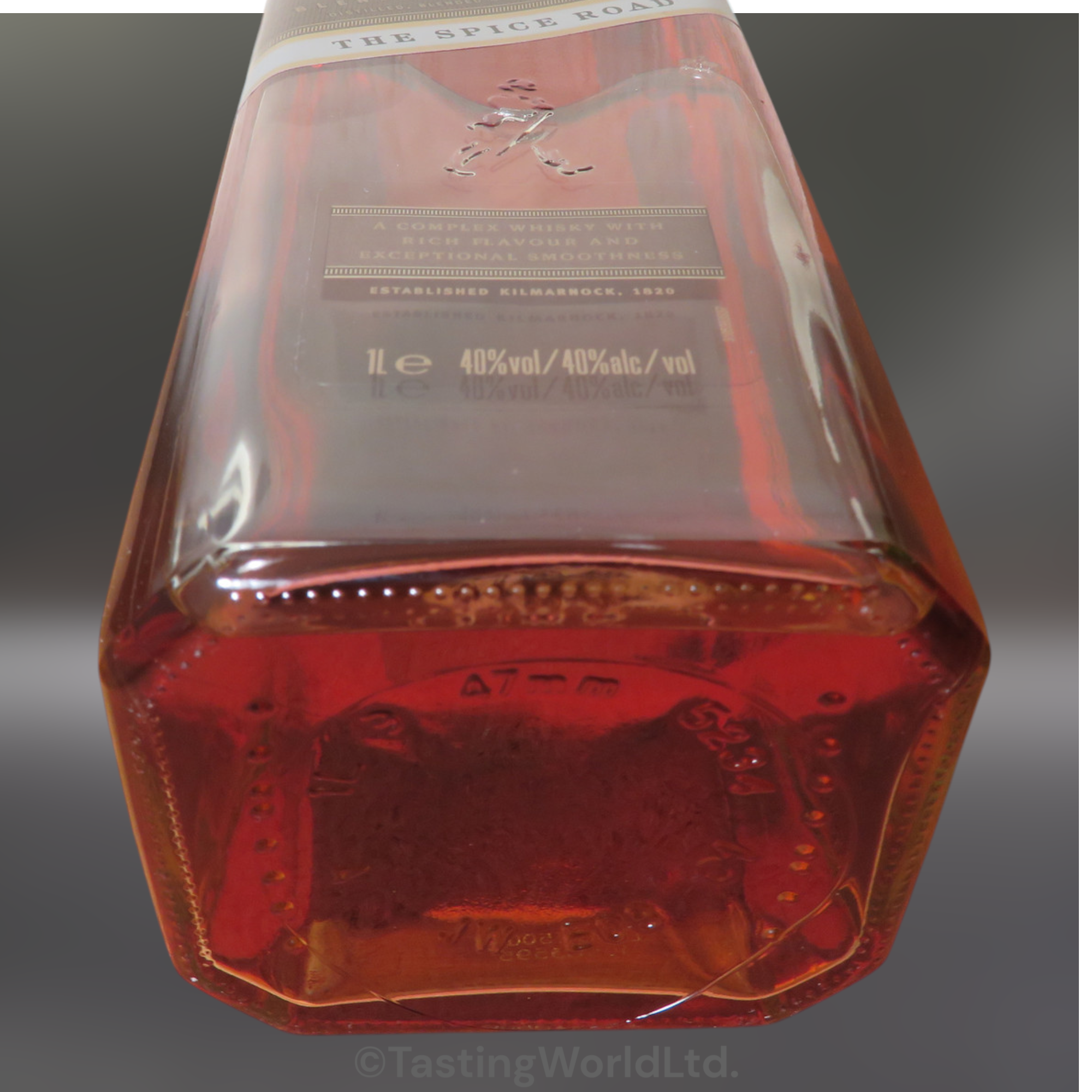
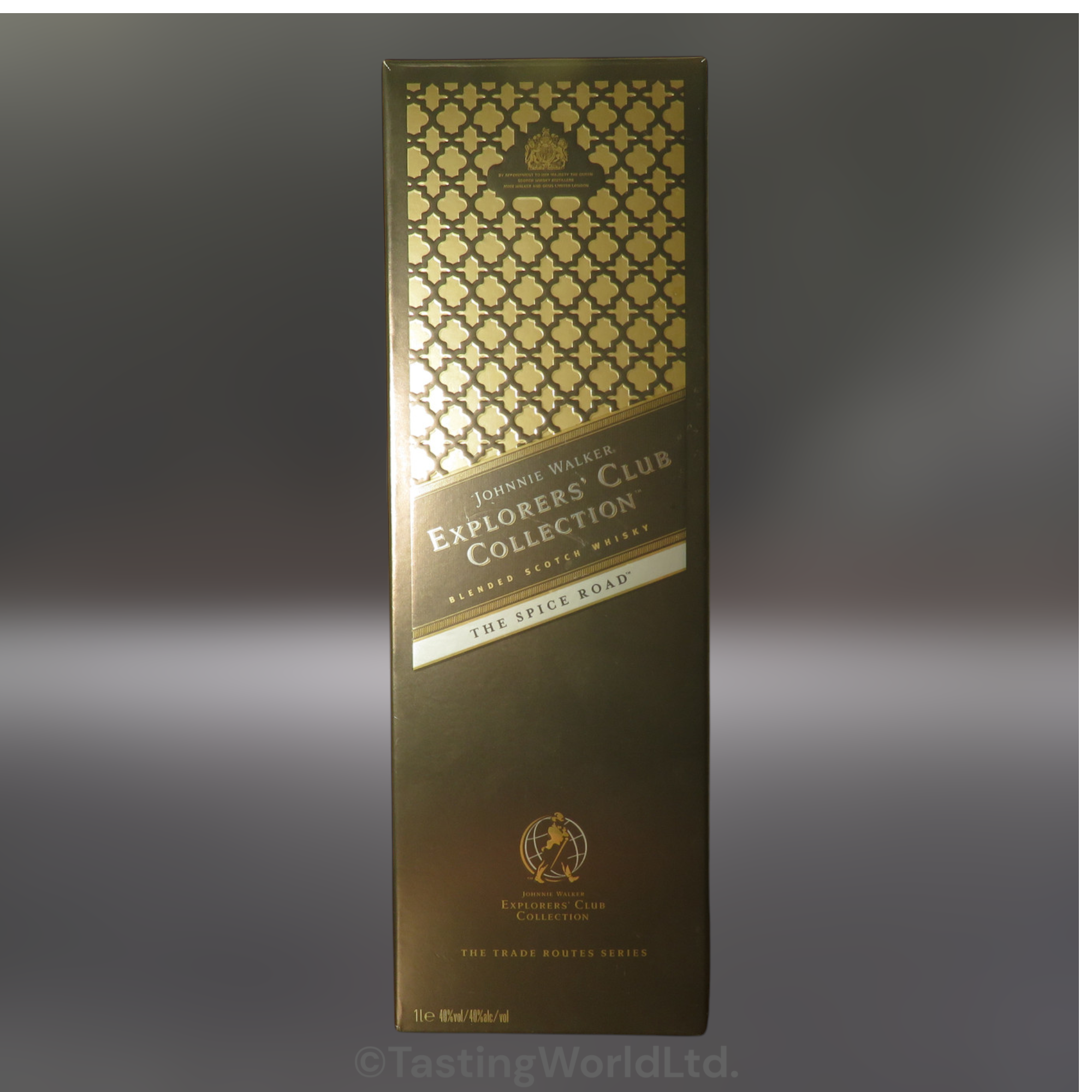
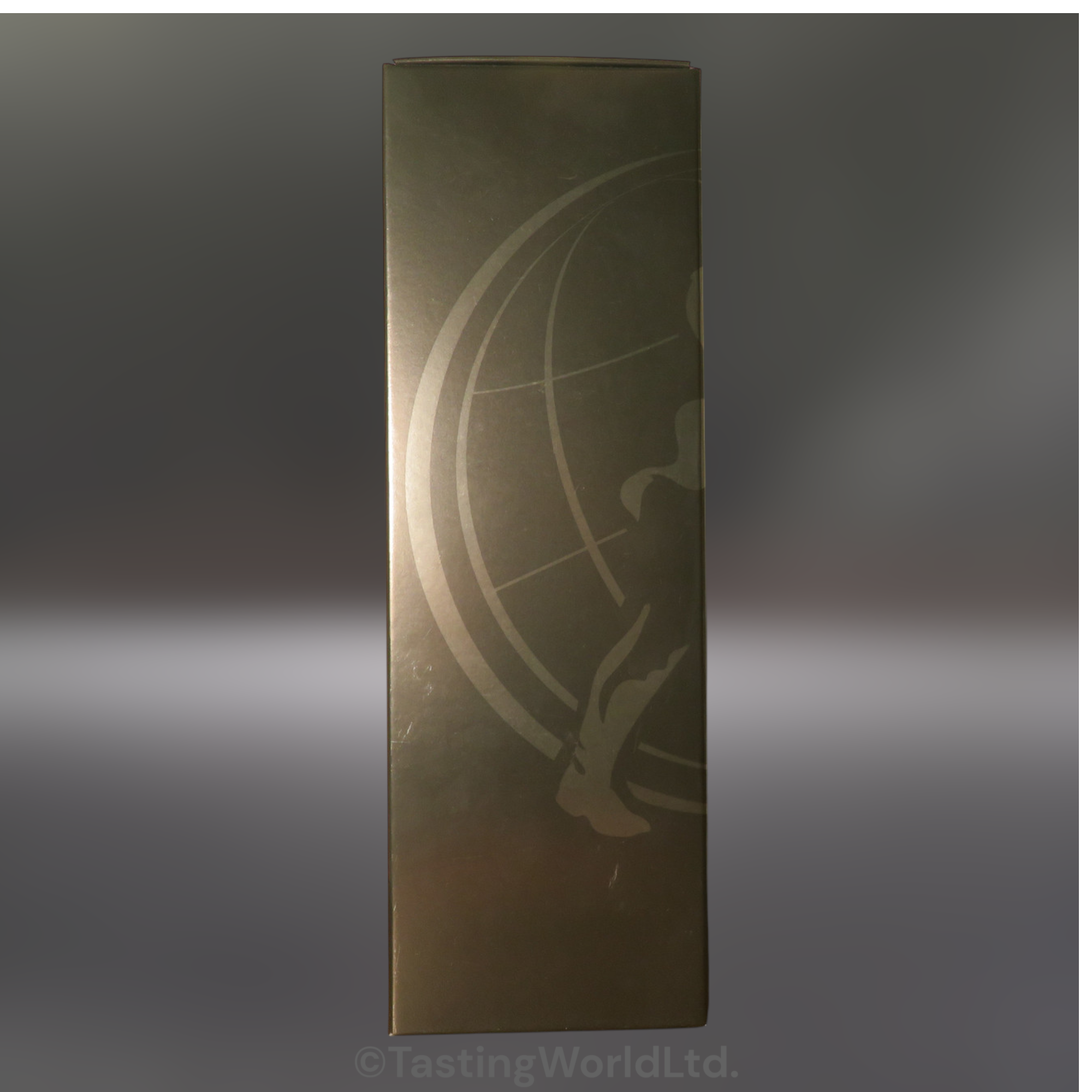
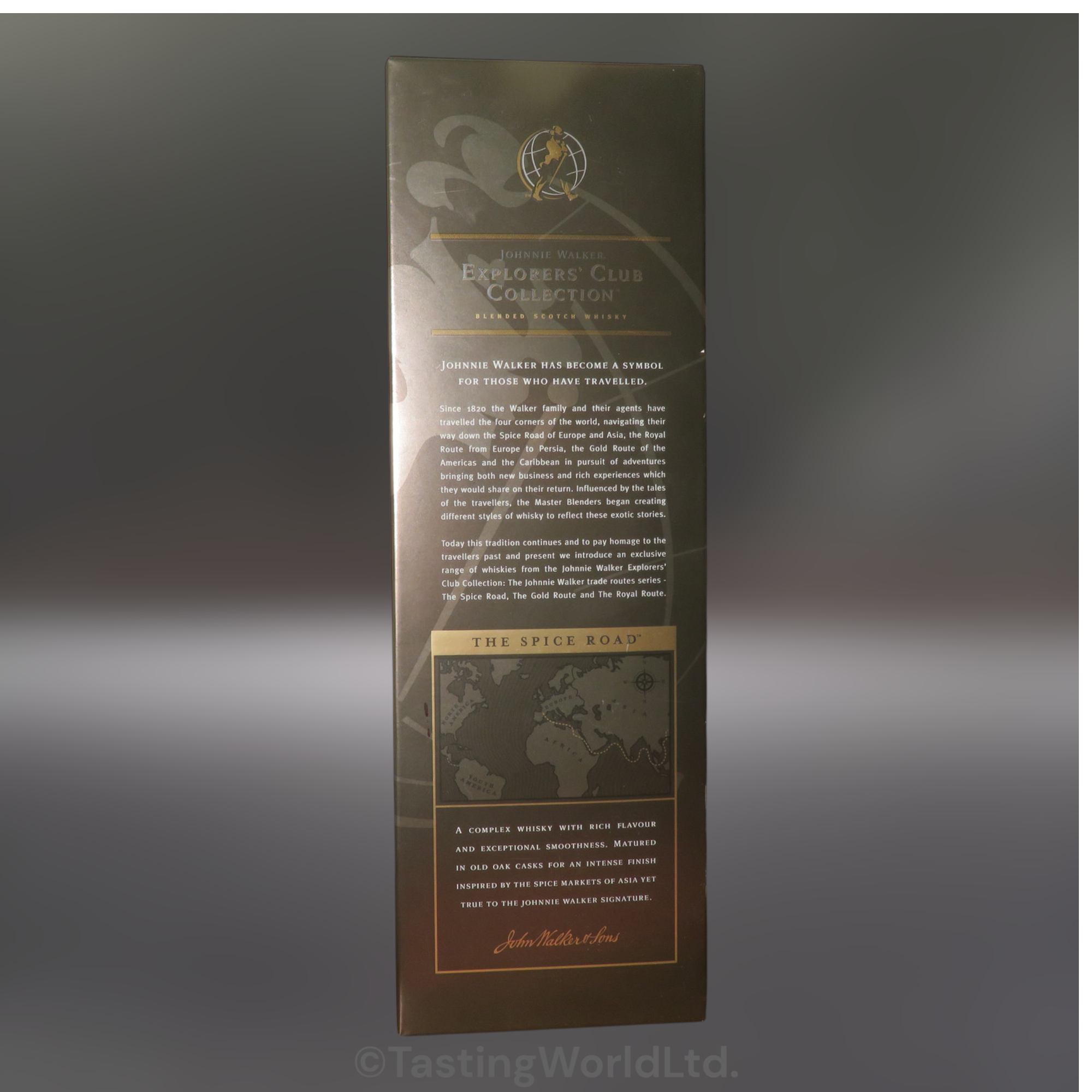
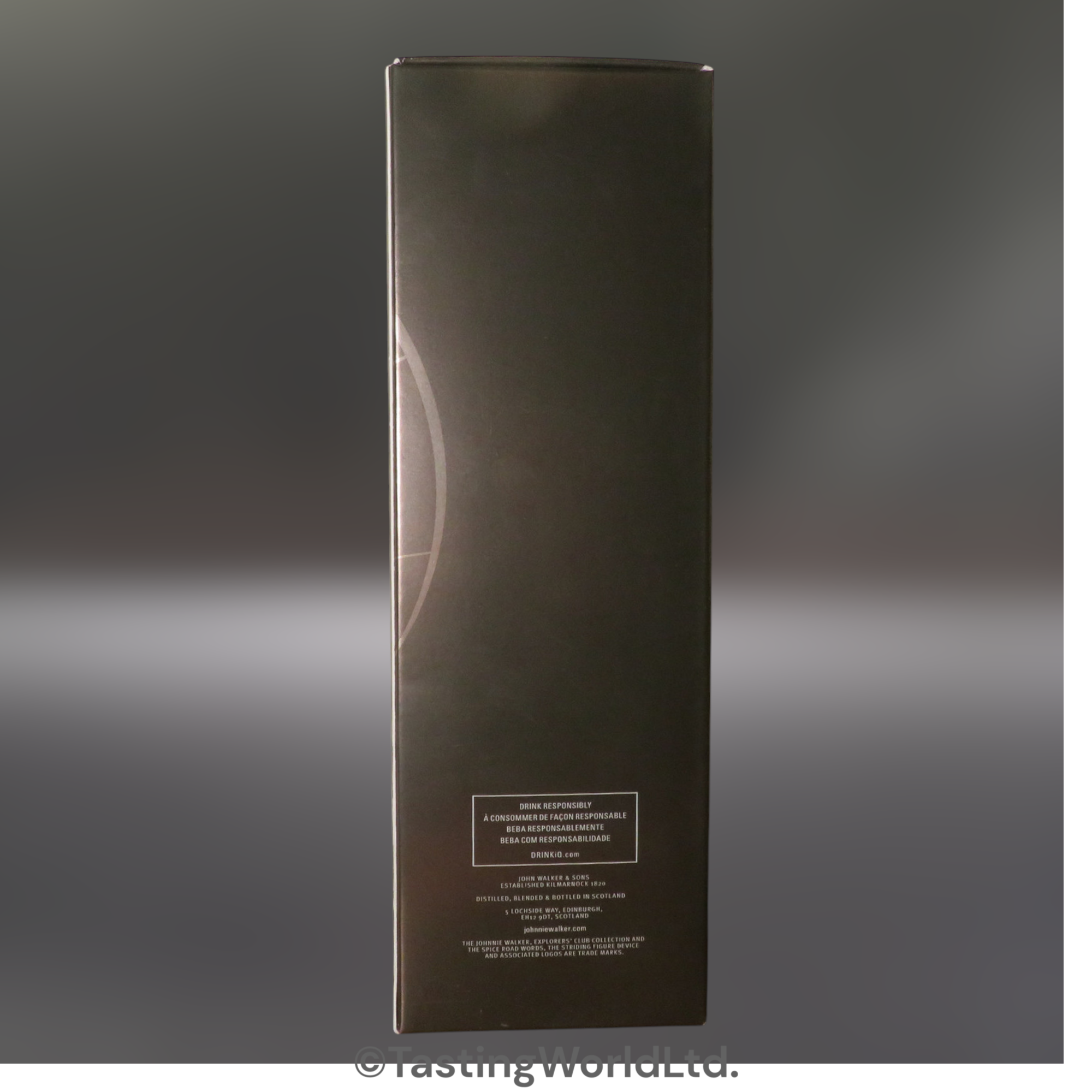
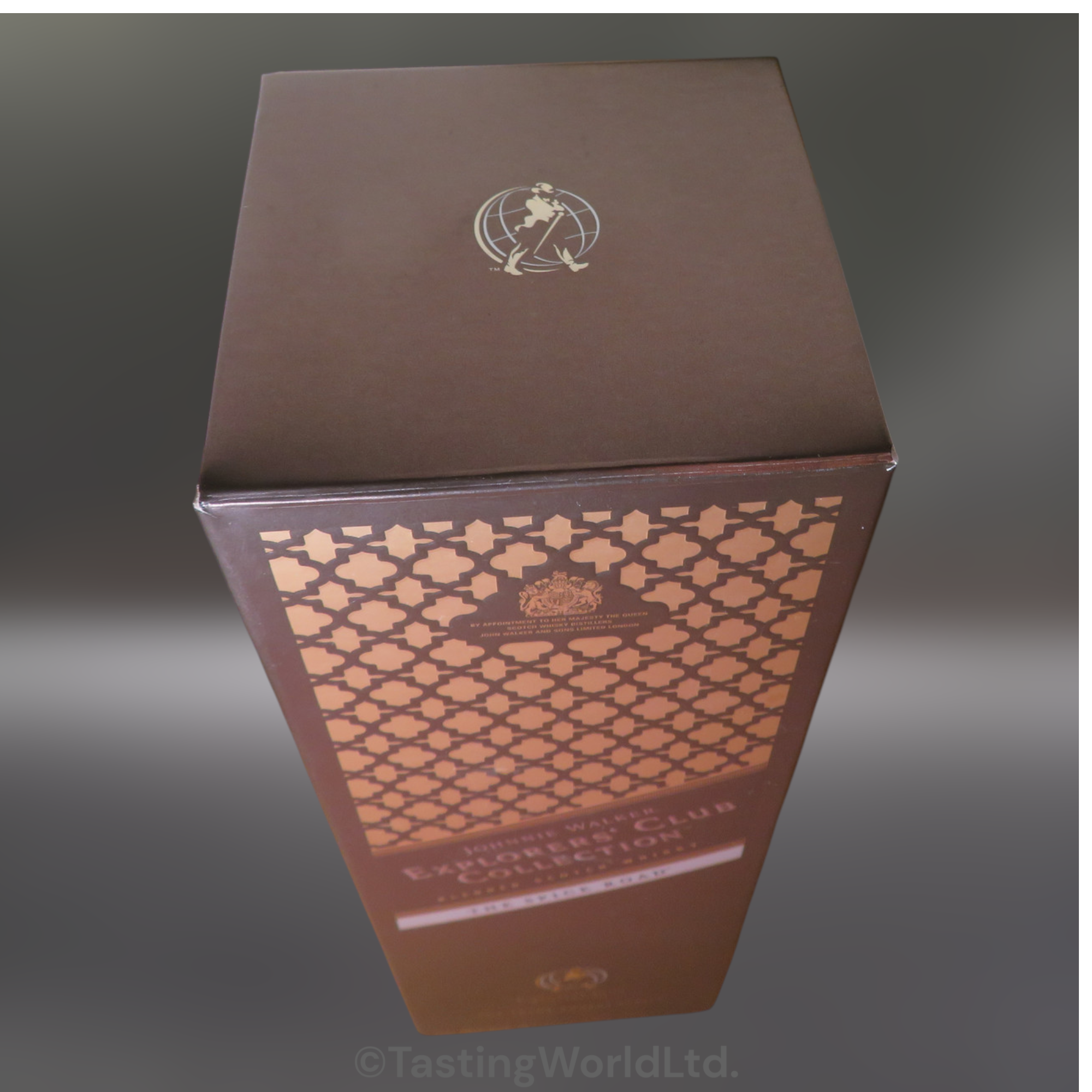


Johnnie Walker Explorer's Club Collection – The Spice Road with presentation box.
Units in Stock: 3
298,00 € inc. tax
Johnnie Walker Explorer's Club Collection – The Spice Road with presentation box...
Condition: New. Collector.
Fill level: New. In the neck.
Whisky still produced: No, limited edition.
Category: Blend.
Distillery: Still producing.
Bottler: Distillery Bottling.
Bottling series: Limited Edition - Explorers’ Club Collection. - The trade route series.
Bottling Year: 2013
Stated Age: Not declared.
Cask type: Old oak.
Strength: 40.0 % Vol.
Size: 1000 ml. (1ltr.)
Colouring: Yes.
Chill-filtered: Yes.
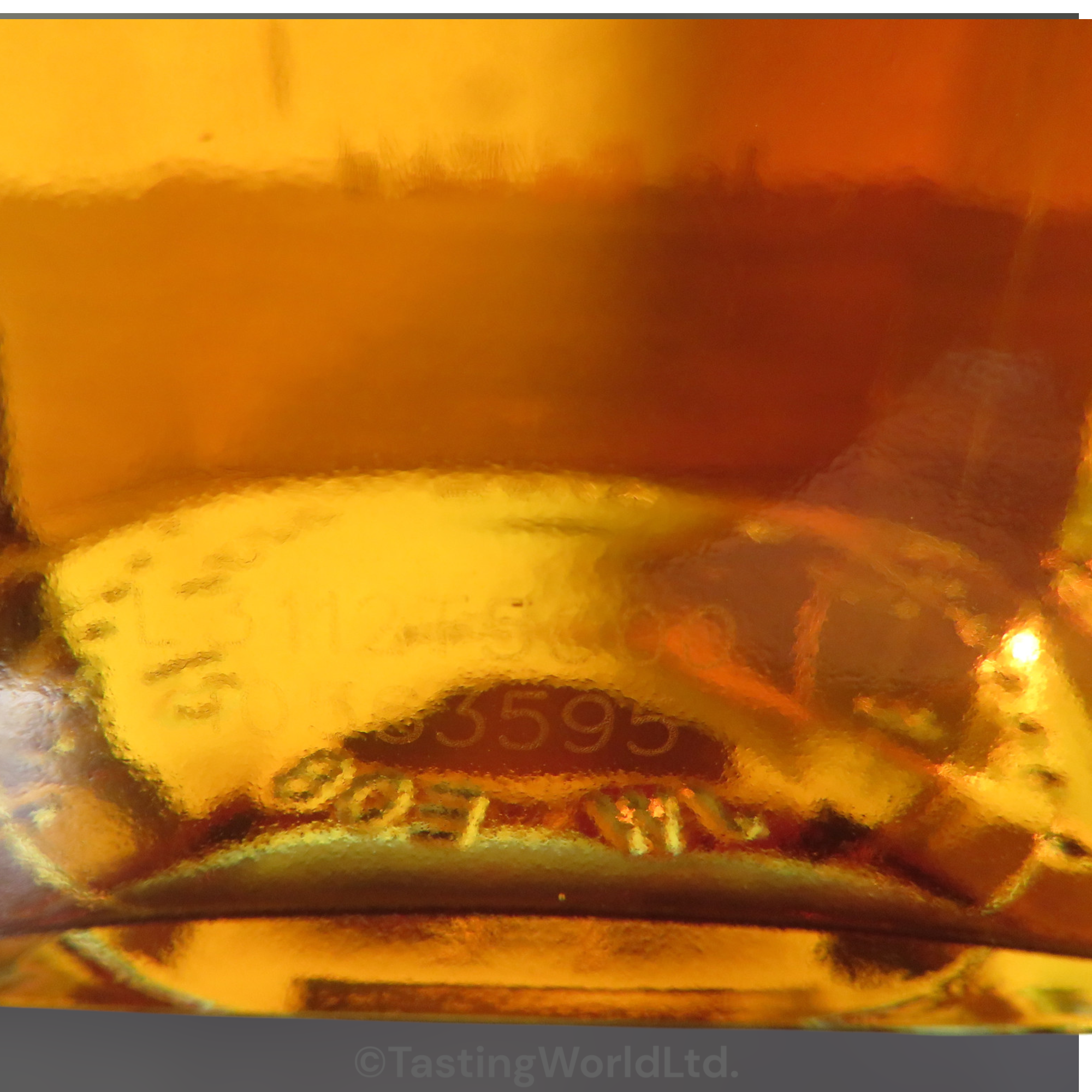
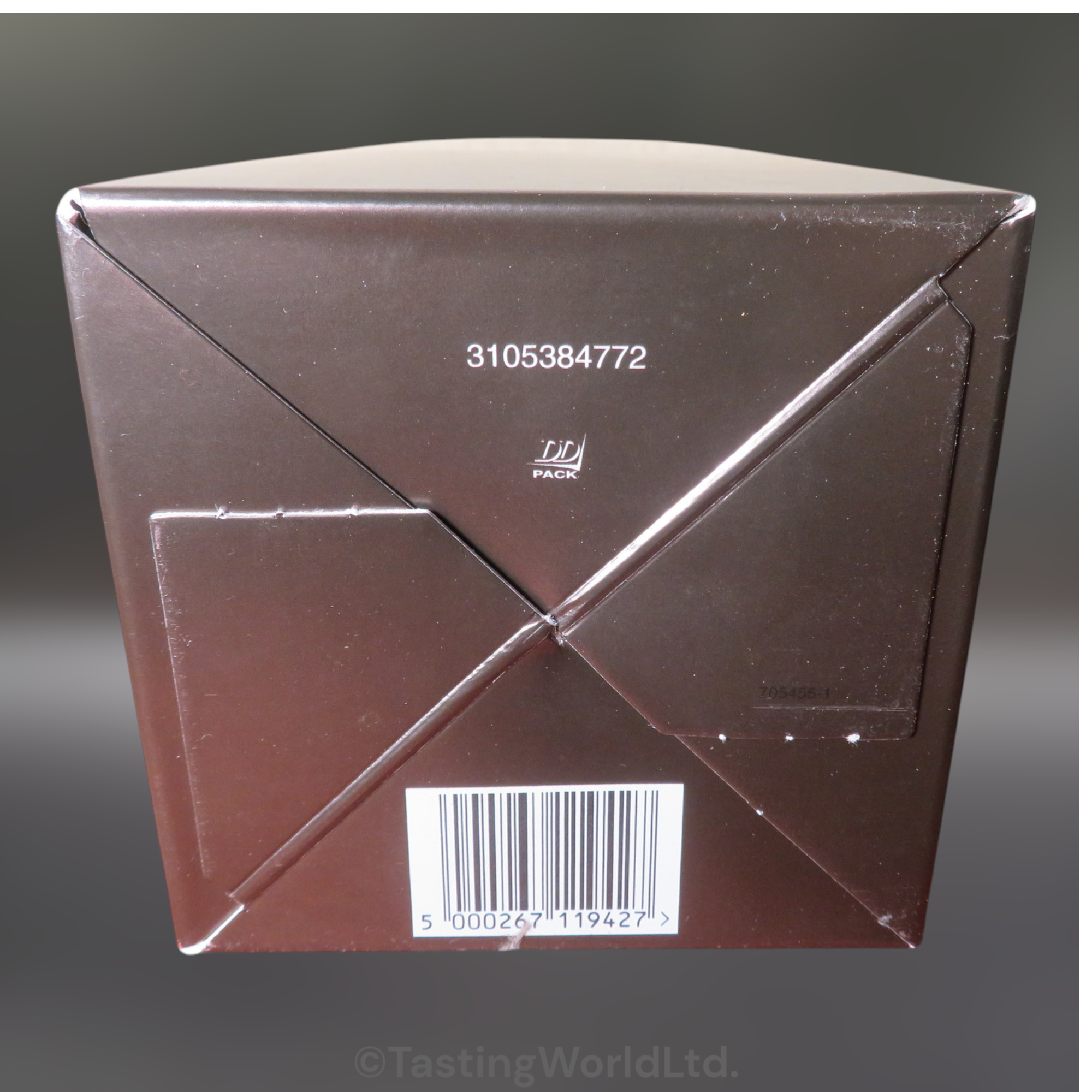
Bottle code: Yes, please ask! Example L3112T5000 10563595
Country Origin: Scotland.
Market: Travel retail, Worldwide.
A distinguished release from Johnnie Walker’s now‑discontinued Explorers’ Club Collection, The Spice Road stands as one of the most evocative expressions created exclusively for the travel‑retail market. Inspired by the ancient spice routes that shaped global trade, this edition captures the warmth, depth and aromatic richness associated with those legendary journeys. Presented in the original 1‑litre format at 40% vol, the bottle retains its full prestige packaging, making it an exceptional example for collectors who value completeness and condition.
The profile is defined by layers of vibrant spices, subtle sweetness and a gentle wisp of smoke, all woven together with the refined balance that characterises Johnnie Walker’s blending tradition. Its presentation is equally striking: the embossed gift box, the elegant bottle design and the travel‑exclusive detailing reflect the premium positioning of the series. The production identifiers ("L3112T5000 and 10563595" example.) confirm its authentic bottling lineage within Diageo’s controlled batch system, adding further provenance for collectors who appreciate traceable production history.
With the Explorers’ Club Collection long withdrawn from the market, The Spice Road has become increasingly desirable among enthusiasts seeking discontinued Johnnie Walker releases. This bottle offers not only a taste of the series’ distinctive character but also a well‑preserved piece of modern whisky history—an ideal addition to any curated collection.
Tasting notes;
Appearance/colour; Antique bronze with golden highlights.
Nose; Aromatic and inviting, opening with sweet sherry warmth, raisins, and dried fruits. Beneath the sweetness lies a layer of toasted nuts, ginger, and tobacco leaf, followed by subtle hints of cinnamon and cardamom that define the “Spice Road” character.
Palate; Smooth and rounded, delivering an immediate burst of sweet sherry, caramel, and honeyed malt. The spice profile builds gradually—nutmeg, clove, and a touch of pepper—balanced by gentle smoke and soft grain sweetness. The texture is silky, with a well‑integrated blend of sweet and spicy elements.
Finish: Medium length, warming and clean. Lingering notes of spice, light oak, and a final echo of caramel sweetness.
Distillery History:
Johnnie Walker is one of the most iconic and widely recognized Scotch whisky brands in the world. Its journey spans over two centuries and mirrors the evolution of the global whisky industry. The story of Johnnie Walker and our whisky history begins, naturally enough, with the man who gave our whisky his name. In 1820, the young farmer’s son started his own grocer’s shop in the thriving town of Kilmarnock. His father had died the year before and the farm sold. It was a tough start in life, but there was always something special about John. A glint in his eye. A fire in his belly.
Within the year, the family farm had been sold, and the money used to set him up with his own grocer’s shop in the thriving local town of Kilmarnock. It was a smart move. In those days, most grocers stocked a line of single malts, but they were never consistent. This wasn’t good enough for John. So he started blending them together to create a whisky that tasted just as good every time.
When John passed away after a full and prosperous life in 1857, he left his son, Alexander, with a very healthy business. These were fast-moving times. Britain was the pulsating heart of an Industrial Revolution that was set to change absolutely everything. In Kilmarnock, the railway had arrived, carrying goods to great ships travelling to the four corners of the world. Like his father, Alexander knew a good opportunity when he saw one.
1805 – Birth of John Walker
-
John Walker was born in 1805 in Kilmarnock, Ayrshire, Scotland.
-
After his father died in 1819, young John, at just 14, was entrusted with managing the family grocery store.
1820 – The Beginning
-
John Walker began selling spirits, including his own blended whisky, at his grocery store.
-
At the time, single malts were inconsistent. Blending allowed for smoother, more reliable quality, which helped Walker's whisky gain popularity.
Expansion under Alexander Walker (1857–1889)
1857 – John Walker Passes
-
John's son, Alexander Walker, inherited the business.
-
He aggressively expanded, focusing on consistent blending and wider distribution.
1867 – “Old Highland Whisky”
-
Alexander created the first commercial blend, “Old Highland Whisky”, and introduced the iconic square bottle, reducing breakage in transport and allowing more efficient packing.
-
The slanted label, angled at 24 degrees, was introduced to stand out visually on the shelf.
Global Growth (1900–1930s)
1909 – Branding Revolution
-
The Walker family rebranded their whiskies under the names:
-
Red Label (younger, vibrant blend)
-
Black Label (smoother, aged 12 years)
-
-
The Johnnie Walker “Striding Man” logo was created by cartoonist Tom Browne, becoming one of the most famous brand mascots in history.
1920s–1930s
-
Despite Prohibition in the U.S., Johnnie Walker continued to expand globally.
-
By 1930, it was available in over 120 countries.
Mergers, Acquisitions & Diageo (1940s–Present)
1945 – Becomes World’s Best-Selling Scotch
-
After WWII, Johnnie Walker cemented itself as the global leader in Scotch whisky.
1986 – Guinness Merger
-
Walker’s parent company merged with Guinness, forming United Distillers.
1997 – Diageo Formation
-
Diageo was created from a merger between Guinness and Grand Metropolitan.
-
Today, Diageo still owns and markets Johnnie Walker, maintaining it as the world's best-selling Scotch whisky brand.
Core Expressions
| Label | Characteristics |
|---|---|
| Red Label | Bold, spicy, ideal for mixing |
| Black Label (12 Years) | Rich, smooth, with smoky depth |
| Green Label (15 Years) | 100% malt whisky, complex and herbal |
| Gold Label Reserve | Luxurious, honeyed, smooth |
| Blue Label | Ultra-premium, rare casks, velvety and refined |
| Double Black | Intensely smoky, deep wood and spice |
| Platinum Label (discontinued/rebranded as 18 Years) | Refined and elegant with matured balance |
Packaging & Symbolism
-
Square Bottles – Less breakage, more efficient shipping.
-
Angled Labels – Easier to read and visually distinctive.
-
Striding Man – Symbolizes forward motion and global ambition.
Global Cultural Impact
-
Frequently referenced in pop culture (e.g., James Bond films).
-
Embraced by royalty, celebrities, and world leaders.
-
Sponsors global sports, arts, and cultural events.
Innovation & Limited Editions
Johnnie Walker continues to release special editions:
-
John Walker & Sons XR 21
-
Johnnie Walker Blue Label Ghost & Rare
-
The Jane Walker Edition (celebrating women in whisky)
-
Johnnie Walker Odyssey (luxury blend in a unique decanter)
Recent Developments
-
2020: 200th anniversary of the brand.
-
2021: Introduction of eco-friendly paper-based bottles (initiative toward sustainability).
-
Ongoing: Focus on innovation and premiumization with luxury blends and travel retail exclusives.
Legacy
Johnnie Walker’s journey from a small Kilmarnock grocery store to a global symbol of whisky excellence is a testament to branding, consistency, and vision. Its message: “Keep Walking” reflects both personal progress and the brand's own enduring evolution.
© copyright, Tasting World Ltd. England.
Product Code: JW EC b10 +b
Brand: Johnnie Walker
Product Condition: New
weight: 1062.0g
No Reviews Posted Yet - be the first!