


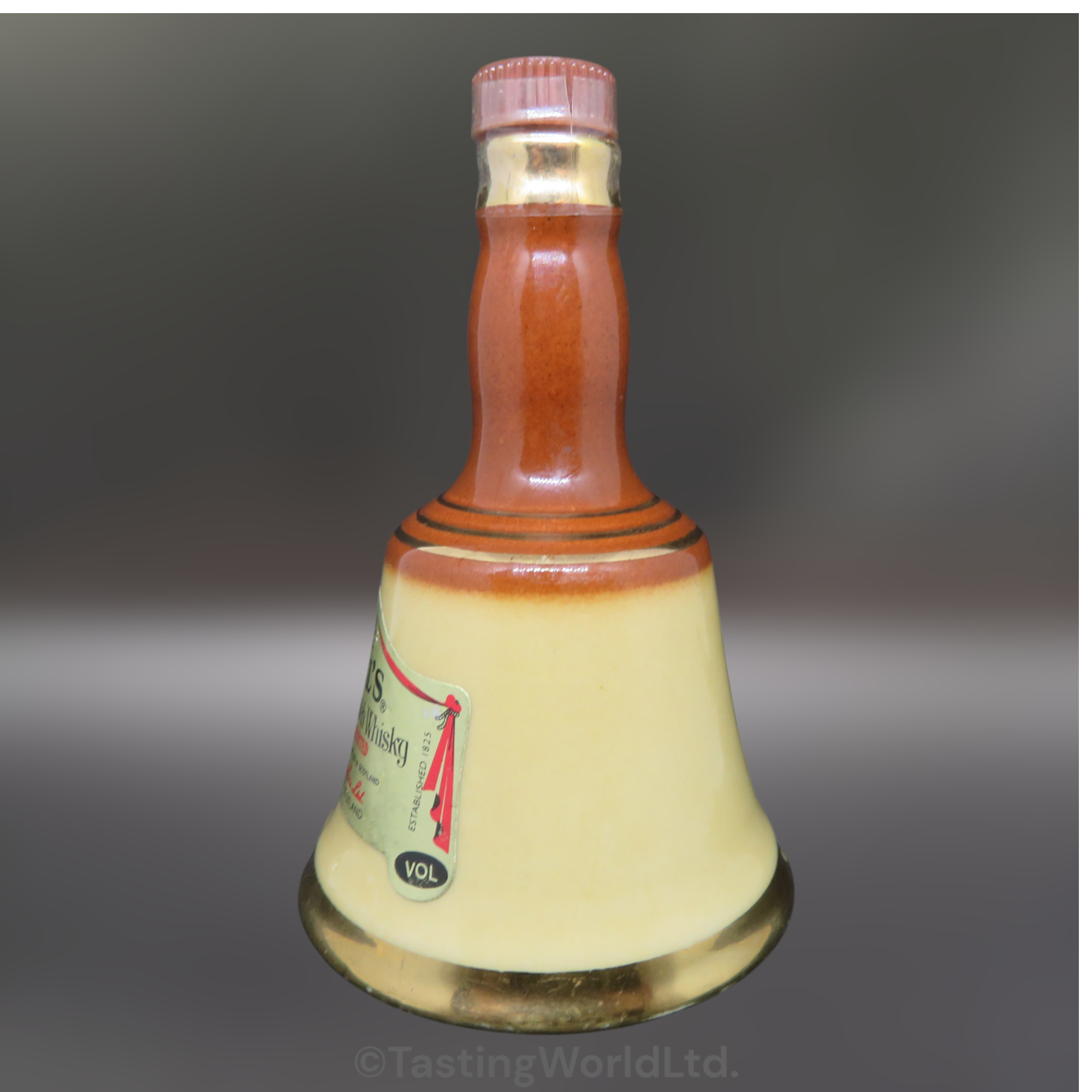
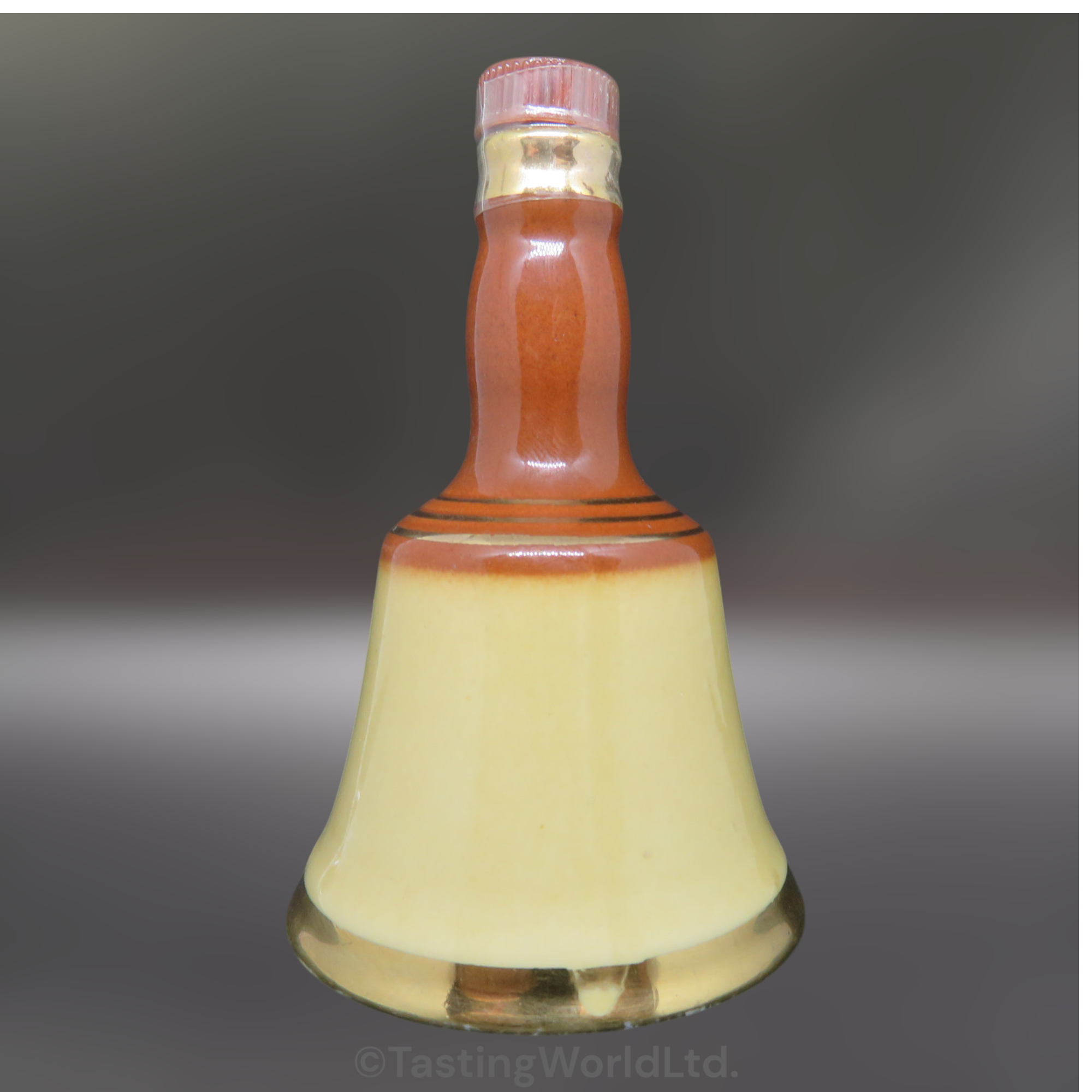
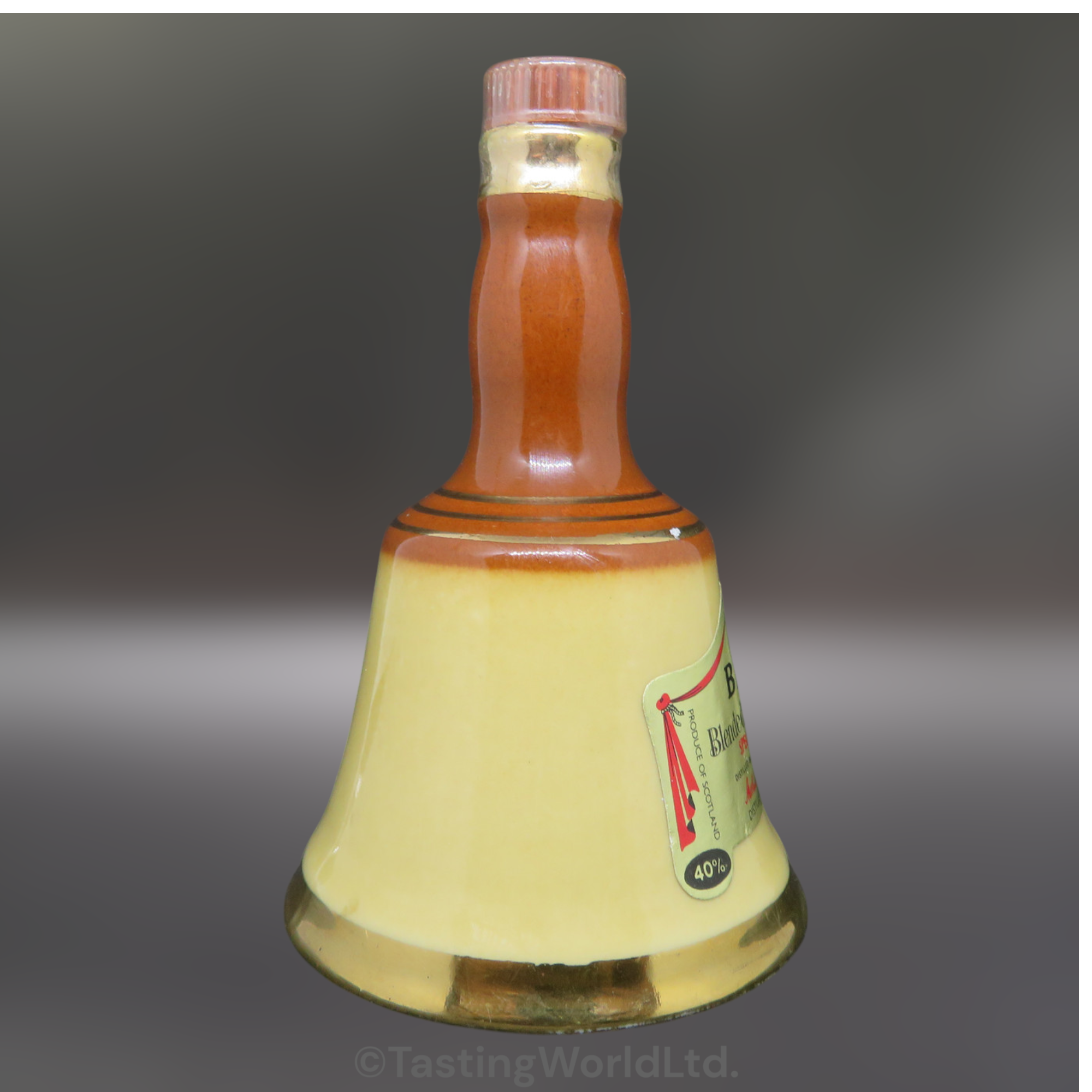
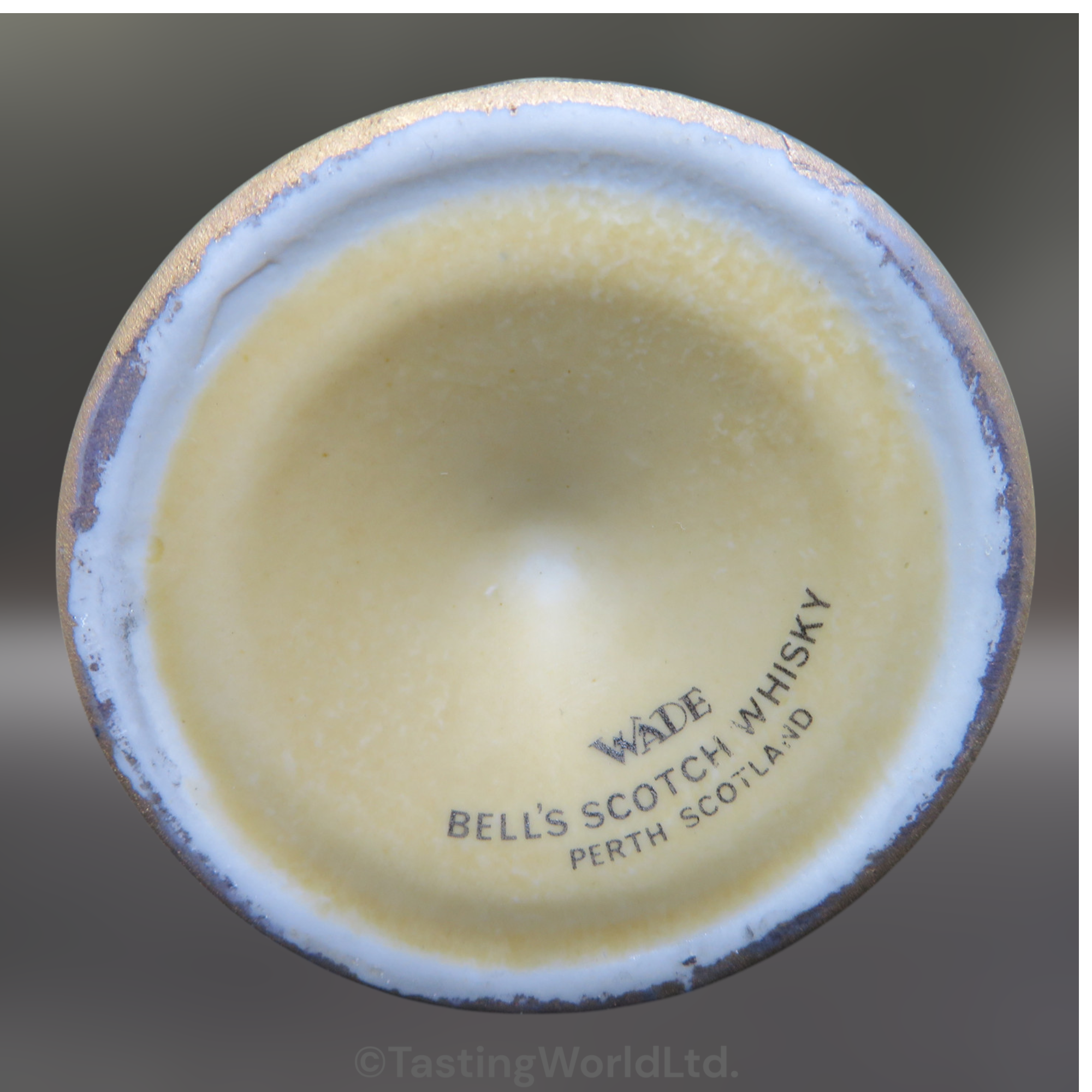
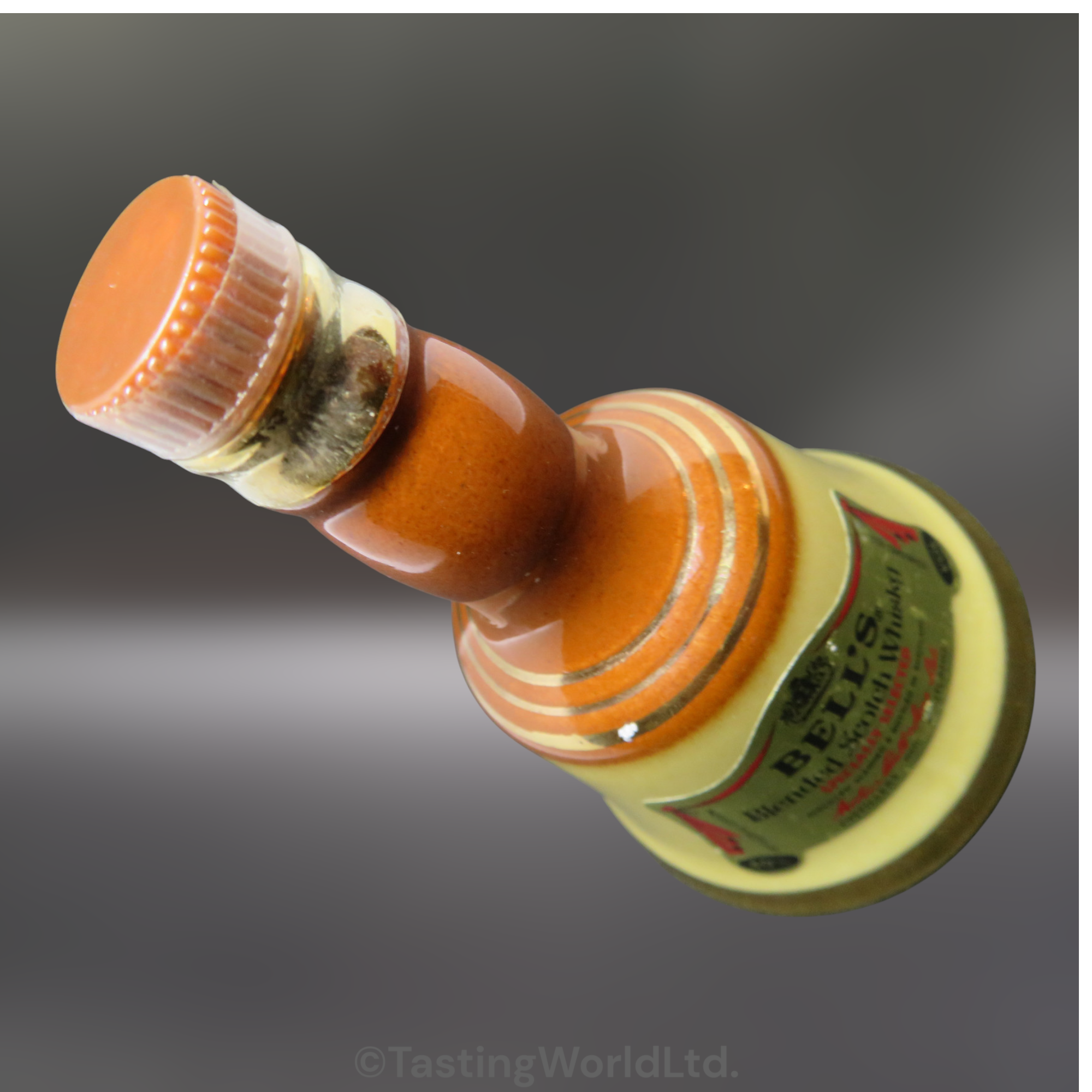


Bell's Blended Scotch Whisky in Wade Decanter 1970s.
Units in Stock: 1
34,90 € inc. tax
Bell's Blended Scotch Whisky in Wade Decanter 1970s...
Condition: Collector-Please note as this is a vintage/rare/limited edition bottle, conditions of bottle/label and liquid level can vary - Some years can varied and as estimations only (example: estimated 1970s/80s).
Fill level: Ceramic decanters have a high "Angels share" est. fill level 70%.
Whisky still produced: No.
Category: Blend.
Distillery: Still producing but, not this whisky.
Bottler: Arthur Bell & Sons.
Bottling serie: Wade ceramic miniature.
Bottling Year: 1970s
Stated Age: Not stated.
Casktype: Not stated.
Strength: 40.0 % Vol.
Size: Not stated. Probably 1/10th pint.
Colouring: Unknown.
Chill-filtered: Unknown - Probably as it was standard in this era.
Bottle code: No.
Country Origin: Scotland.
Market: Italy.
Bell’s Specially Selected Scotch Whisky in Wade Ceramic Decanter miniature is a rare 1980s release created for the Italian market. Bottled by Arthur Bell & Sons, it represents a period when Bell’s was producing a number of export‑focused ceramic miniatures, each crafted to offer a premium presentation of their blended Scotch whisky. The distillery itself continues to operate today, but this particular whisky and decanter series have long been discontinued, adding to their desirability among collectors.
This miniature is presented in a Wade ceramic decanter, a hallmark of Bell’s special editions of the era. Ceramic decanters naturally experience a higher rate of evaporation over decades, and this example shows the typical angel’s share associated with such pieces, with an estimated fill level of around seventy percent. As with all vintage bottles, variations in label condition, ceramic glaze, and liquid level are normal and expected.
The whisky inside is a blended Scotch bottled at 40% vol, with no stated age and no details provided on cask type, colouring, or filtration. Given the production standards of the time, it is likely chill‑filtered. The miniature contains Probably 1/10th pint. and carries no bottle code. Its origin is Scotland.
Tasting notes;
Appearance / Colour The whisky shows a light golden hue typical of Bell’s blends from the late 1970s and 1980s. Ceramic decanters can slightly mute visual clarity, but the colour remains a pale gold with a soft amber tint.
Nose A gentle and classic Bell’s profile: soft malt sweetness, light grain notes, hints of vanilla and honey, and a touch of dried cereal. Subtle oak and a faint spice edge appear with time, accompanied by a mild fruitiness reminiscent of apple skin and light pear.
Palate Smooth, approachable and very much in line with Bell’s house style of the era. The palate opens with sweet grain, soft malt, and mild vanilla, followed by light caramel and a touch of toasted oak. A whisper of dried fruit and gentle spice adds warmth without intensity. The texture is light, clean and easy‑drinking.
Finish Short to medium in length, with lingering grain sweetness, soft oak and a mild dryness. The finish remains clean and uncomplicated, leaving a gentle echo of malt and light spice.
Distillery History: Perth-based Arthur Bell began vatting malt whiskies together to provide greater consistency from 1851, going on to combine malts and grains to create his own blended Scotch. In 1895 the ‘Extra Special’ trademark was registered, and was first used alongside Bell’s name in 1904. This was effectively Bell’s first branded blend, and the ‘Extra Special’ tag was used until the introduction of the Bell’s Original variant in 2008. 1896 saw the registration of Arthur Bell’s signature, which still adorns every bottle, along with the slogan ‘Afore ye go,’ which was registered in 1921 and first used four years later.
By 1970 Bell’s was Scotland’s leading blended Scotch, and in 1978 it became the best-selling blended Scotch in the UK, having seen sales grow in value by some 800% between 1970 and 1979, though it did briefly lose its number one status to The Famous Grouse in 1980.
Remarkably, by that year Bell’s could boast around 35% of the market share for standard blended Scotch in Britain. During the decade from 1970, output from Bell’s distilleries rose from 4.75 million litres per annum to 13.44 million litres, partly due to the construction of Pittyvaich distillery in Dufftown during 1974. Much of the credit for Bell’s dramatic growth is usually given to Arthur Bell & Sons’ dynamic chairman and chief executive Raymond Miguel, who left the company in the wake of its takeover by Guinness in 1985.
One major change to the actual Bell’s blend took place in 1994, when an 8-year-old age statement was added. This was a time when there was a surplus of mature Scotch whisky, so the move to give a perception of additional quality and kudos was understandable.
With mature whisky in short supply by 2008, the age statement was removed and the blend rebranded as Bell’s Original, with owner Diageo claiming that the revamped recipe was closer to that first formulated by Arthur Bell.
Bell’s first began to release whisky in ceramic decanters during the 1920s, commemorating special occasions, and by 1930 a bell-shaped decanter was in use. A unique decanter is now produced each Christmas, while the highest prices at auction are paid for the 1981 Prince Charles & Lady Diana Spencer Royal Wedding decanter.
Today, the leading markets for Bell’s Original are the UK, South Africa, the Nordic countries, Spain and Brazil, and globally the brand is currently the 10th best-selling blended Scotch whisky, accounting for 2.36 million cases in 2013.
© copyright, Tasting World Ltd. England.
Product Code: B's wd m 0
Brand: Bell's
Product Condition: New
weight: 150.0g
No Reviews Posted Yet - be the first!