


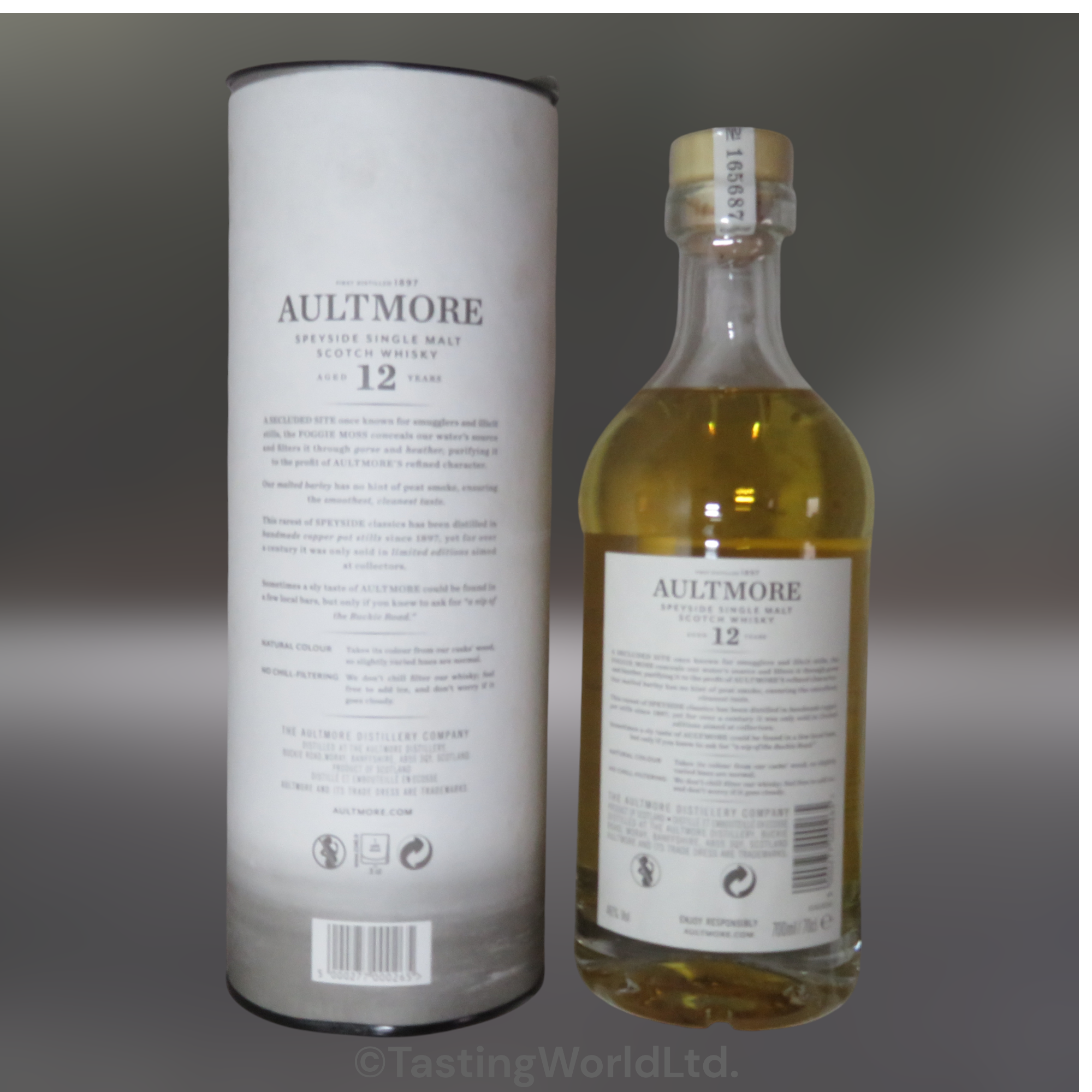

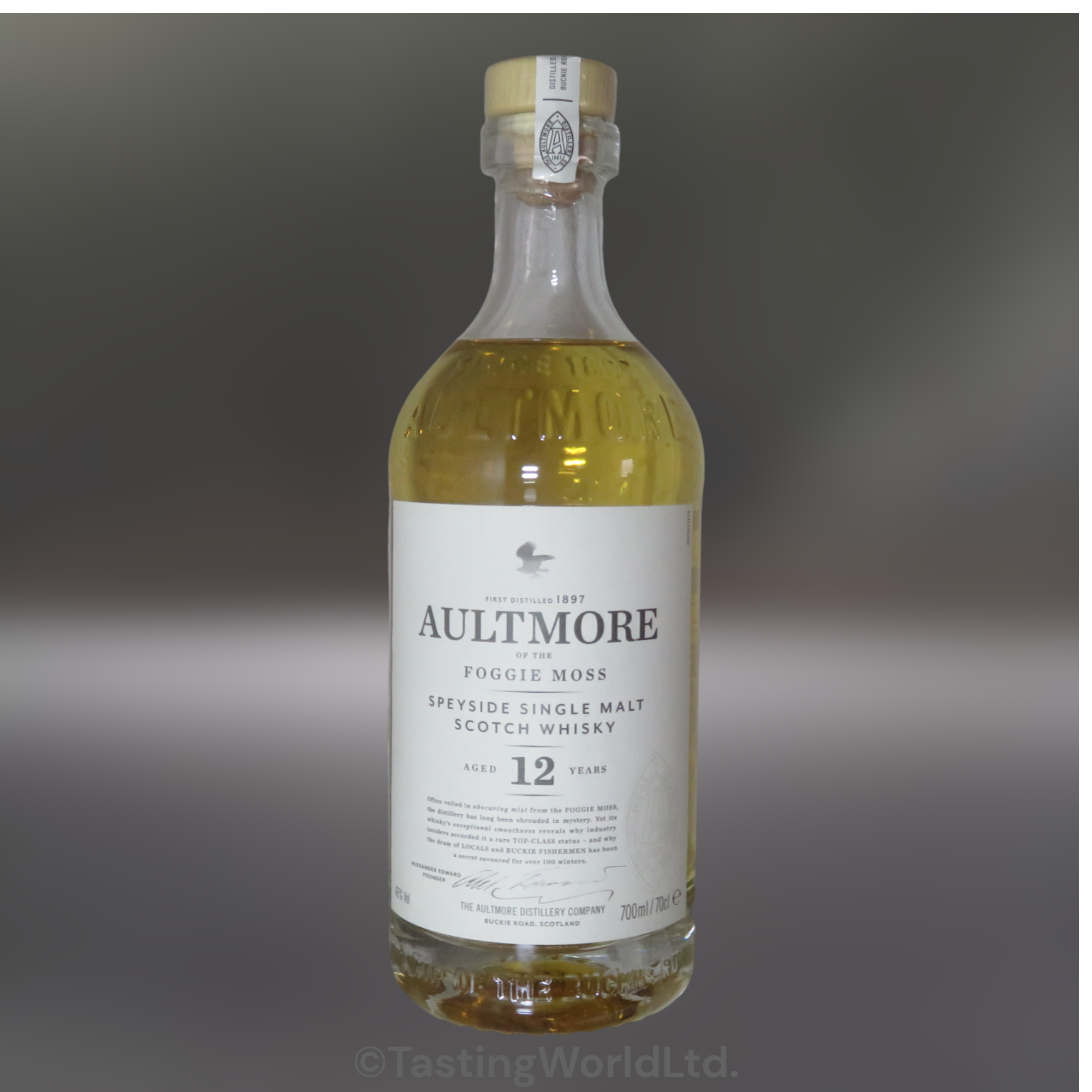

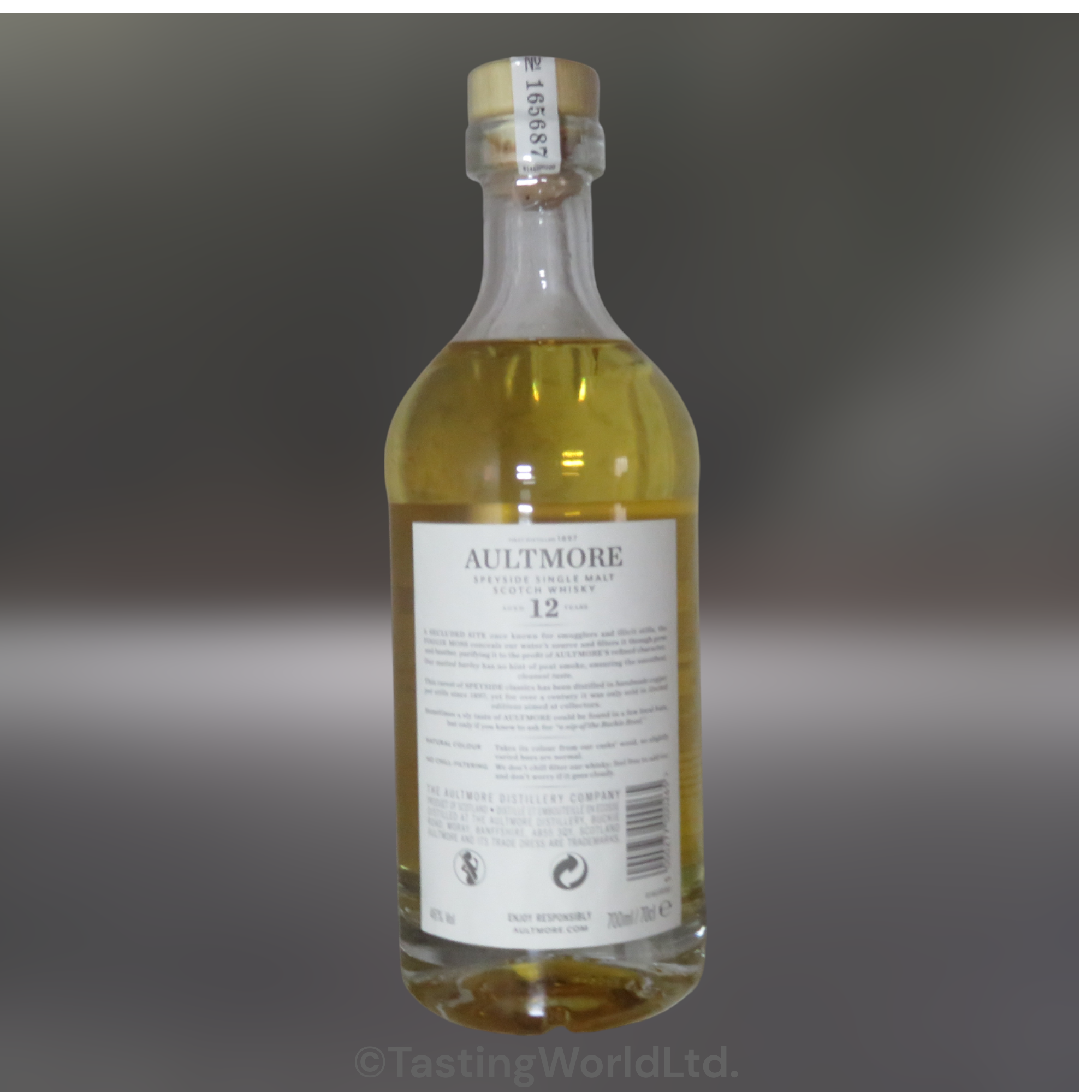

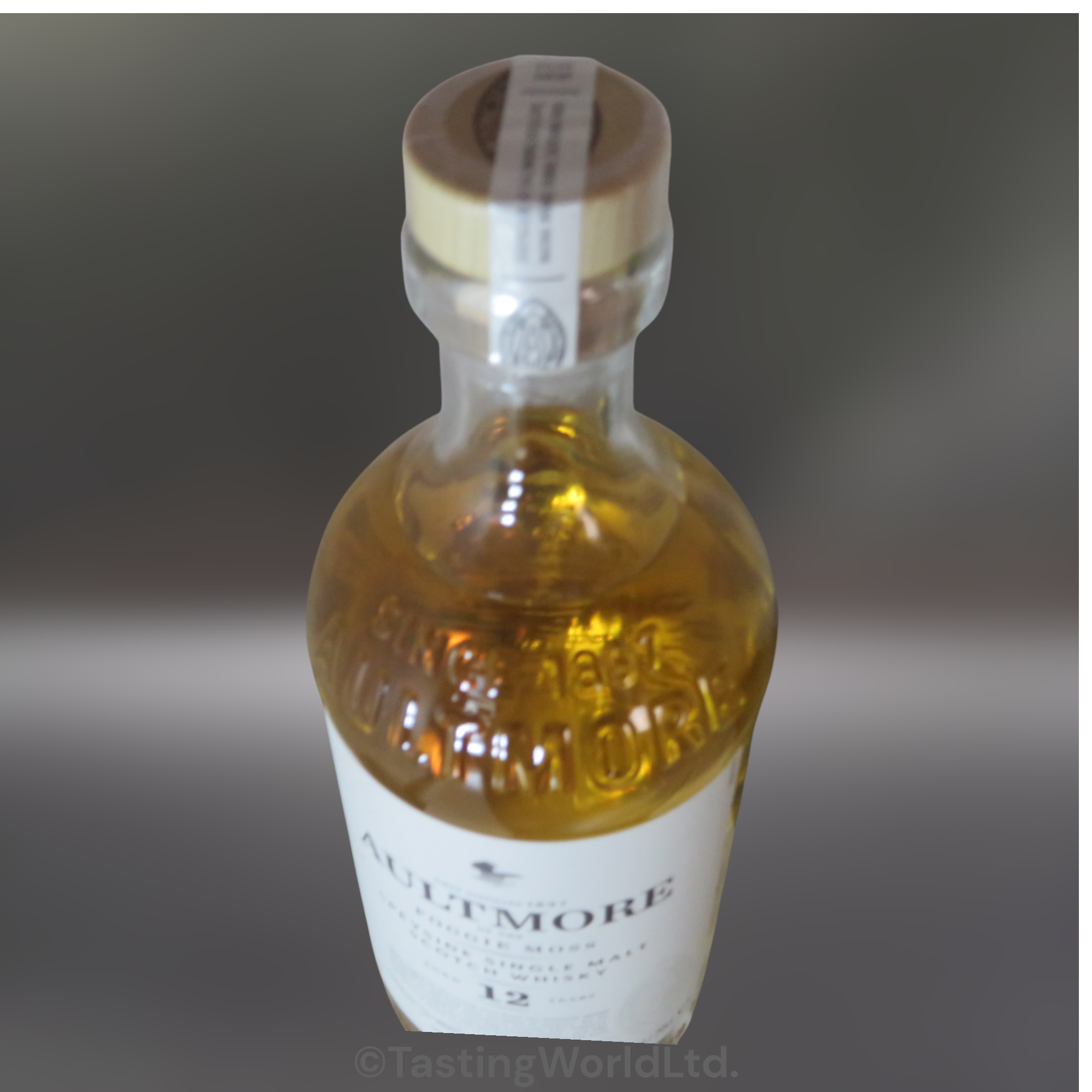


Aultmore of the FOGGIE MOSS 12 year Speyside single malt whisky
2017 Aultmore of the FOGGIE MOSS 12 year Speyside single malt whisky with box.
Condition: New.
Lost Distillery/Brand: No.
Fill level: New. In the neck.
Whisky still produced: Yes.
Category: Single malt.
Distillery: Aultmore Distillery, Speyside, Scotland. Still producing.
Bottler: Distillery Bottling.
Bottling series: Foggie Moss.
Vintage: Not stated.
Bottling Year: 2017.
Stated Age: 12 years old.
Cask type: Refill Hogsheads. Predominantly ex-Bourbon casks.
Strength: 46.0% Vol.
Size: 700 ml.
Colouring: No. Natural (no artificial colouring).
Chill-filtered: No. Non-chill filtered.
Bottle code: Several... PLEASE ASK!
Country Origin: Scotland.
Region: Speyside.
Market: Worldwide.
Aultmore 12 Year Old is part of the Last Great Malts of Scotland collection from John Dewar & Sons, which showcases the distillery’s traditionally light and unpeated Speyside character. Crafted at the Aultmore Distillery, founded in 1897 near Keith in Banffshire, this expression is matured for at least twelve years in American oak ex-Bourbon casks using crystal-clear water from the Burn of Auchinderran.
Long prized by master blenders for its purity and smoothness, Aultmore was for decades a hidden malt known mostly to insiders. The 12-year-old official bottling reveals the distillery’s signature style in its natural form — delicate, fragrant, and unmistakably Speyside. Bottled at 46 % ABV without chill-filtration or artificial colouring, it offers a clean and elegant profile ideal for both collectors and enthusiasts seeking authenticity.
Tasting notes;
-
Colour: Pale golden amber
-
Nose: Fresh and vibrant with aromas of green apple, pear, meadow flowers, and soft vanilla cream.
-
Palate: Smooth and rounded with sweet malt, honeyed cereal, gentle citrus, and light pastry tones.
-
Finish: Medium length, with lingering orchard fruit, light spice, and a touch of heather.
Aultmore Distillery History
Founding and Early Years (1895–1914)
Aultmore Distillery was founded in 1895 by Alexander Edward, an enterprising distiller from Craigellachie who was also involved in Benrinnes, Craigellachie, and Dallas Dhu distilleries. The distillery was constructed on the Burn of Auchinderran, about two miles north of Keith in Banffshire, Speyside, chosen for its reliable water source and proximity to the Great North of Scotland Railway.
Aultmore was designed during the height of the late Victorian whisky boom, producing a light, grassy malt whisky highly sought after by blenders. The name "Aultmore" derives from the Gaelic Allt Mòr, meaning "big burn" or "great stream," referencing the local watercourse.
Production began in 1897, and the spirit quickly gained a reputation for quality. However, like many Speyside distilleries, it faced hardship during the early 20th century when the Pattison whisky crash of 1898 devastated the blending industry. Aultmore survived but reduced operations significantly during the downturn.
Interwar and Post-War Years (1914–1959)
The distillery was temporarily closed during World War I (1914–1918) due to barley shortages and government restrictions on alcohol production. In 1923, Alexander Edward sold Aultmore to John Dewar & Sons Ltd., a prominent blending company based in Perth. This acquisition integrated Aultmore into Dewar’s extensive blending operations, where it became a key component of the Dewar’s White Label and other blended Scotch whiskies.
Ownership passed to Distillers Company Limited (DCL) in 1925 following Dewar’s merger into the Scotch whisky conglomerate. The distillery remained in operation through the 1930s, although intermittently closed due to economic conditions and World War II.
After the war, production stabilized, and Aultmore’s spirit continued to be prized for blending, particularly within the Buchanan’s and Dewar’s portfolios.
Modernisation and Expansion (1960–1998)
In 1967, DCL undertook significant modernisation at Aultmore, rebuilding the distillery and installing new steam-heated stills. The number of stills was increased from two to four, effectively doubling capacity. The rebuild also introduced modern Saladin boxes for malting (later closed when centralized maltings were introduced elsewhere).
During this period, Aultmore’s whisky remained largely dedicated to blends and was seldom seen as a single malt. However, it gained quiet recognition among industry insiders for its delicate, floral, and cereal-forward Speyside character.
In 1998, following corporate restructuring, ownership of Aultmore transferred to Bacardi Ltd., as part of its acquisition of John Dewar & Sons from Diageo. Bacardi continues to own and manage the distillery through Dewar’s.
21st Century and Single Malt Recognition (1998–Present)
While most of Aultmore’s output still goes into Dewar’s blends, Bacardi began promoting it as a standalone single malt in the 2010s under the “Last Great Malts of Scotland” series. In 2014, the first core single malt expressions were released globally, including the Aultmore 12 Year Old, Aultmore 18 Year Old, and Aultmore 25 Year Old, featuring elegant packaging and natural presentation (non-chill filtered, no artificial colouring).
These bottlings were designed to showcase the distillery’s signature Speyside style — light, honeyed, with herbal and grassy notes — and to elevate Aultmore’s visibility in the premium single malt category.
Aultmore continues to operate as a medium-sized malt distillery, producing around 2 million litres of pure alcohol annually. The distillery remains unstaffed at times and remotely monitored through Bacardi’s centralized operations, but it retains traditional copper stills and worm tubs, ensuring consistency with its historical flavour profile.
Notable Characteristics
-
Water Source: Auchinderran Burn (fed by the Foggie Moss)
-
Stills: 4 copper pot stills
-
Annual Capacity: Approx. 2.1 million LPA
-
Ownership: Bacardi Ltd. (John Dewar & Sons)
-
Primary Use: Component malt for Dewar’s blends; also bottled as single malt in the “Last Great Malts” series
-
Distillery Style: Light, grassy, floral, with sweet cereal notes typical of Speyside
Production & Technical Information
-
The distillery draws its water from the Auchinderran Burn (and related sources) which gives a pure and crisp water supply. scottishdelight.com+1
-
After its mid-20th century modernisation, Aultmore operates multiple stills (two wash stills and two spirit stills) with a capacity in the millions of litres of pure alcohol per year. Whisky.com+1
-
The site underwent a major rebuilding/expansion in the early 1970s (1970-71) when stills were increased and production was upgraded. Whisky Discovery
-
The malting floors ceased in 1968; malt is now likely supplied externally. singlemalt.pl
Role & Style
-
For much of its lifetime, Aultmore’s output was used predominantly for blending rather than for its own single malt bottling. However, its spirit was highly respected within the blending houses.
-
More recently, Aultmore has been bottled as a single malt under its own name (e.g., 12-year-old, 18-year-old). The company describes the style as “fresh and delicately sweet, well-balanced whisky”.
Heritage & Unique Features
-
The distillery’s name, location and water source lend it a sense of “hidden Speyside gem” – often characterised by grassy, floral, fruit-driven notes rather than heavy smoke or sherry dominance.
-
It benefits from modern equipment and relatively recent investment, while retaining traditional Speyside influences.
-
Aultmore underwent an expansion project celebrating its 125th anniversary (announced by Bacardi) that emphasised its longstanding heritage and commitment to quality.
Summary
Aultmore Distillery sits quietly on the A96 near Keith, producing a spirit that is crisp, bright and characterful. Founded in the late 19th century, it evolved from a blending malt to a recognised single malt. Steeped in Speyside tradition yet technologically up-to-date, it stands as a fine example of the region’s capability to produce refined, elegant whisky.
Timeline Summary
| Year | Event |
|---|---|
| 1895 | Founded by Alexander Edward |
| 1897 | Production begins |
| 1898 | Affected by the Pattison crash |
| 1914–1918 | Closed during WWI |
| 1923 | Sold to John Dewar & Sons |
| 1925 | Becomes part of DCL |
| 1967 | Rebuilt and expanded to four stills |
| 1998 | Ownership transferred to Bacardi Ltd. |
| 2014 | Relaunch as part of Dewar’s “Last Great Malts” series |
© copyright, Tasting World Ltd. England.