


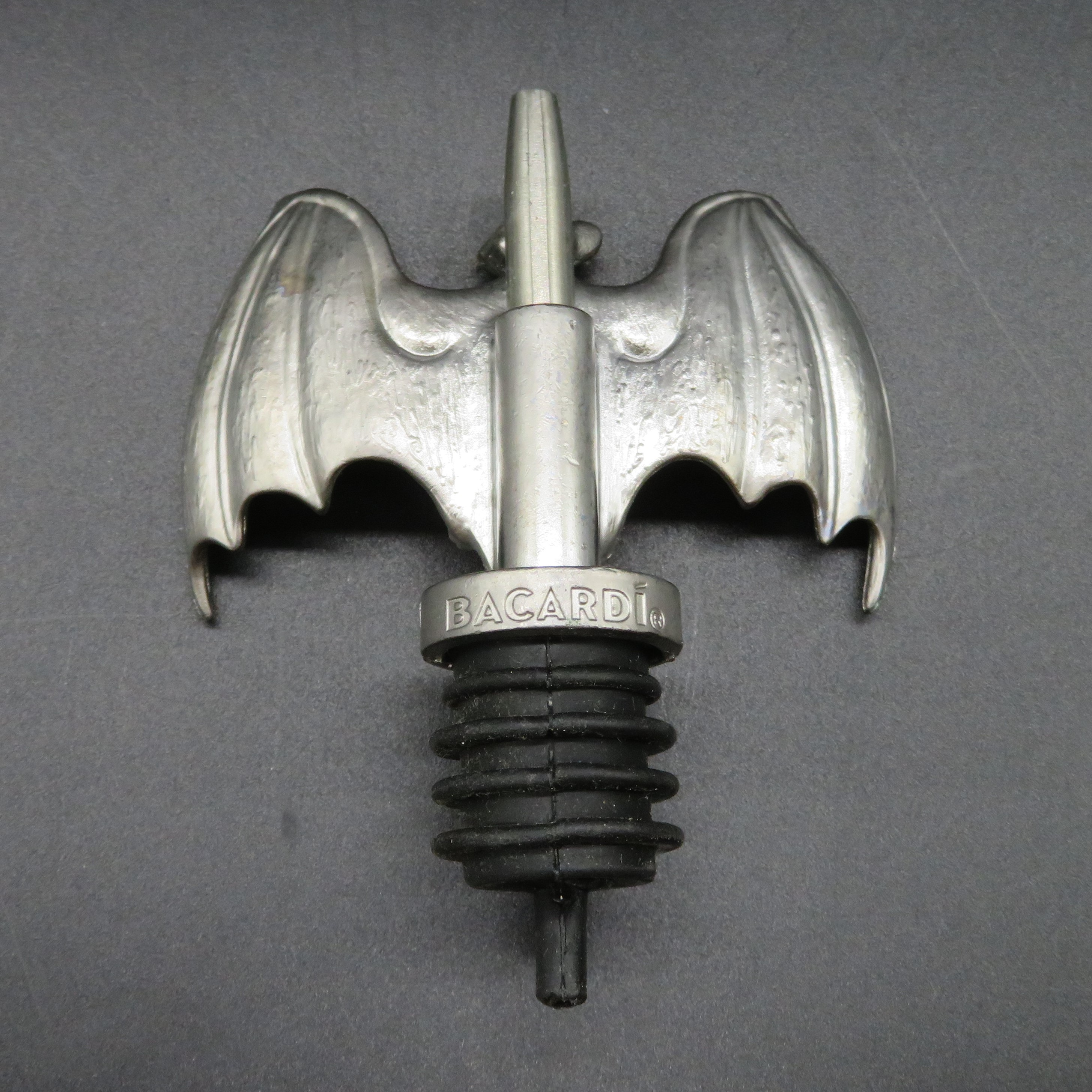

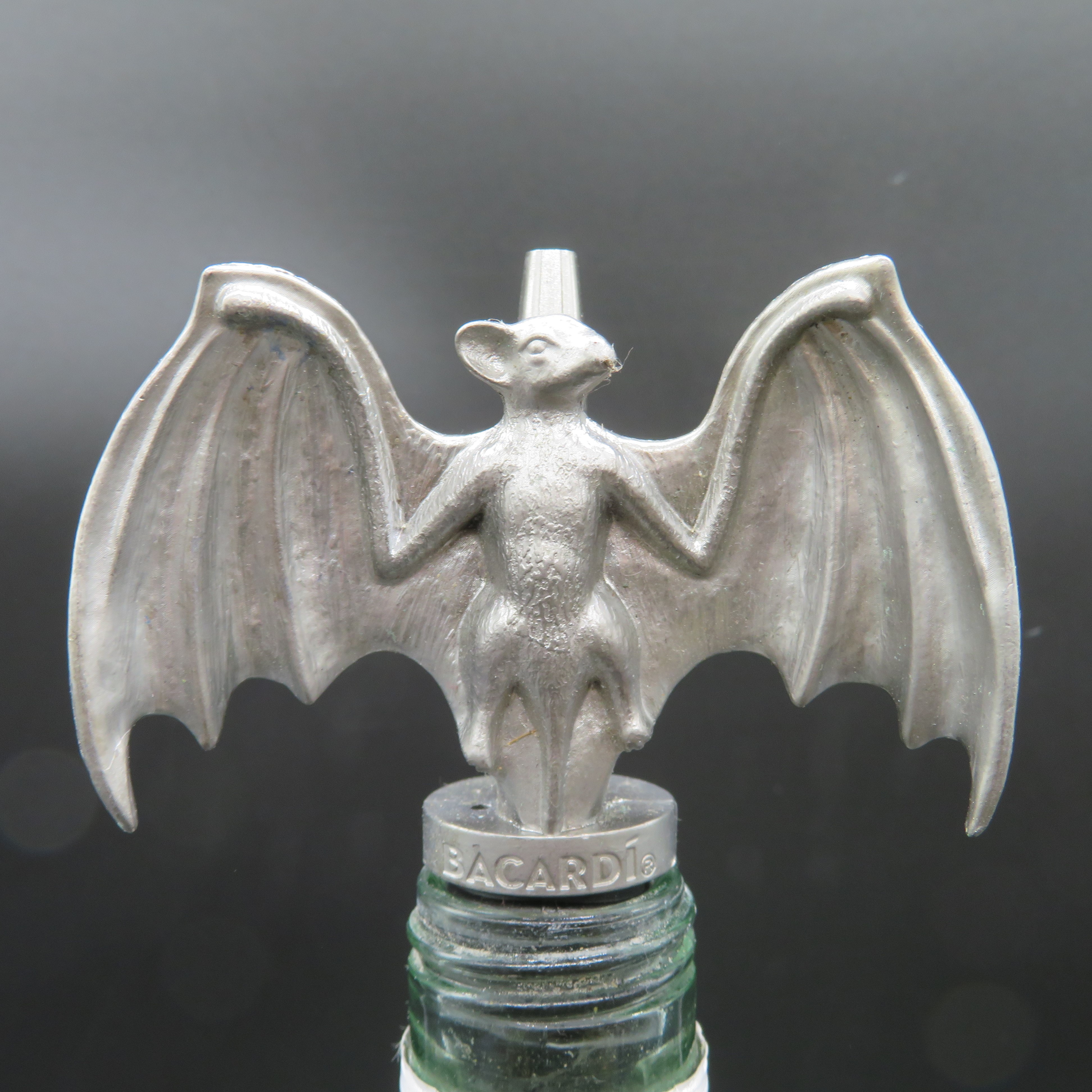

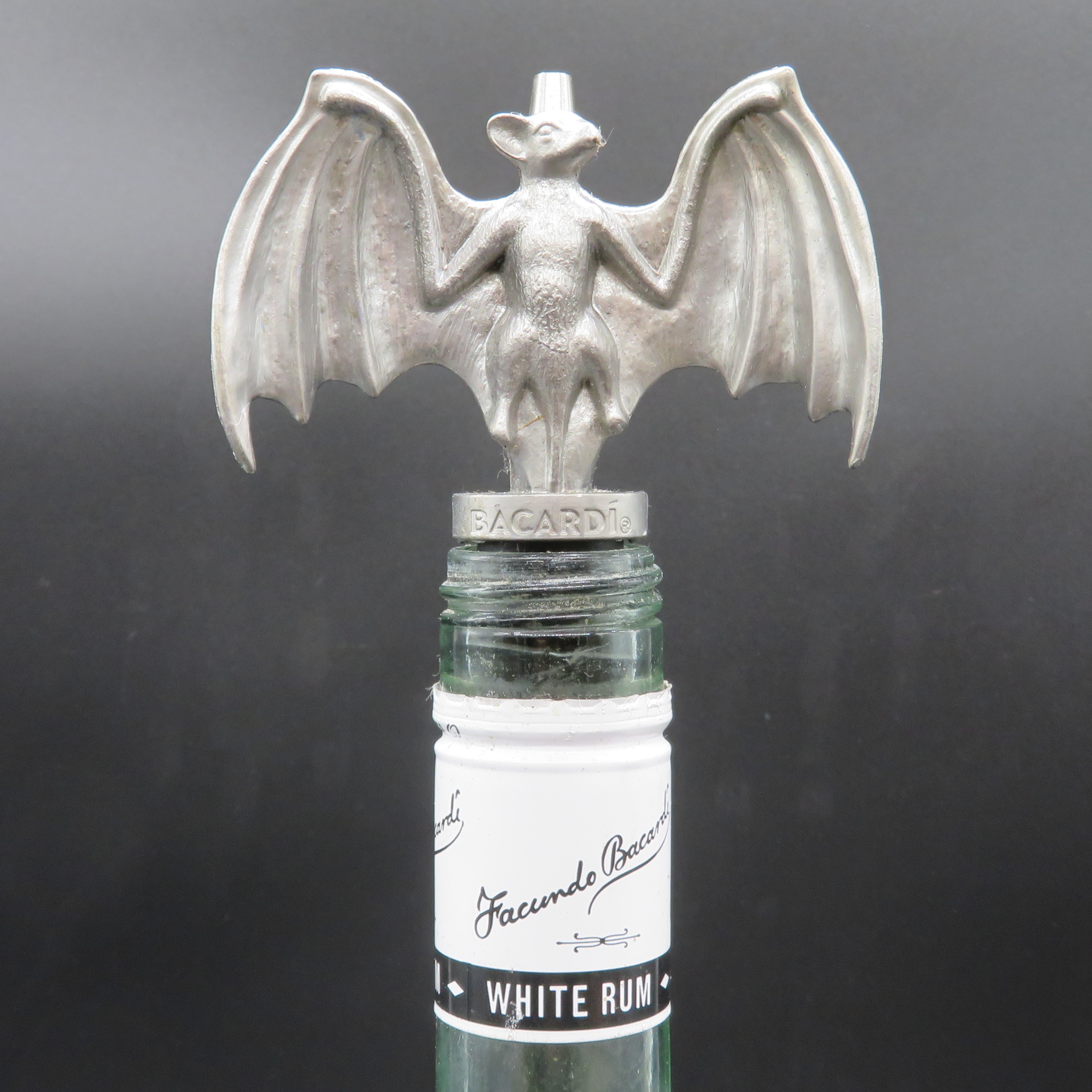

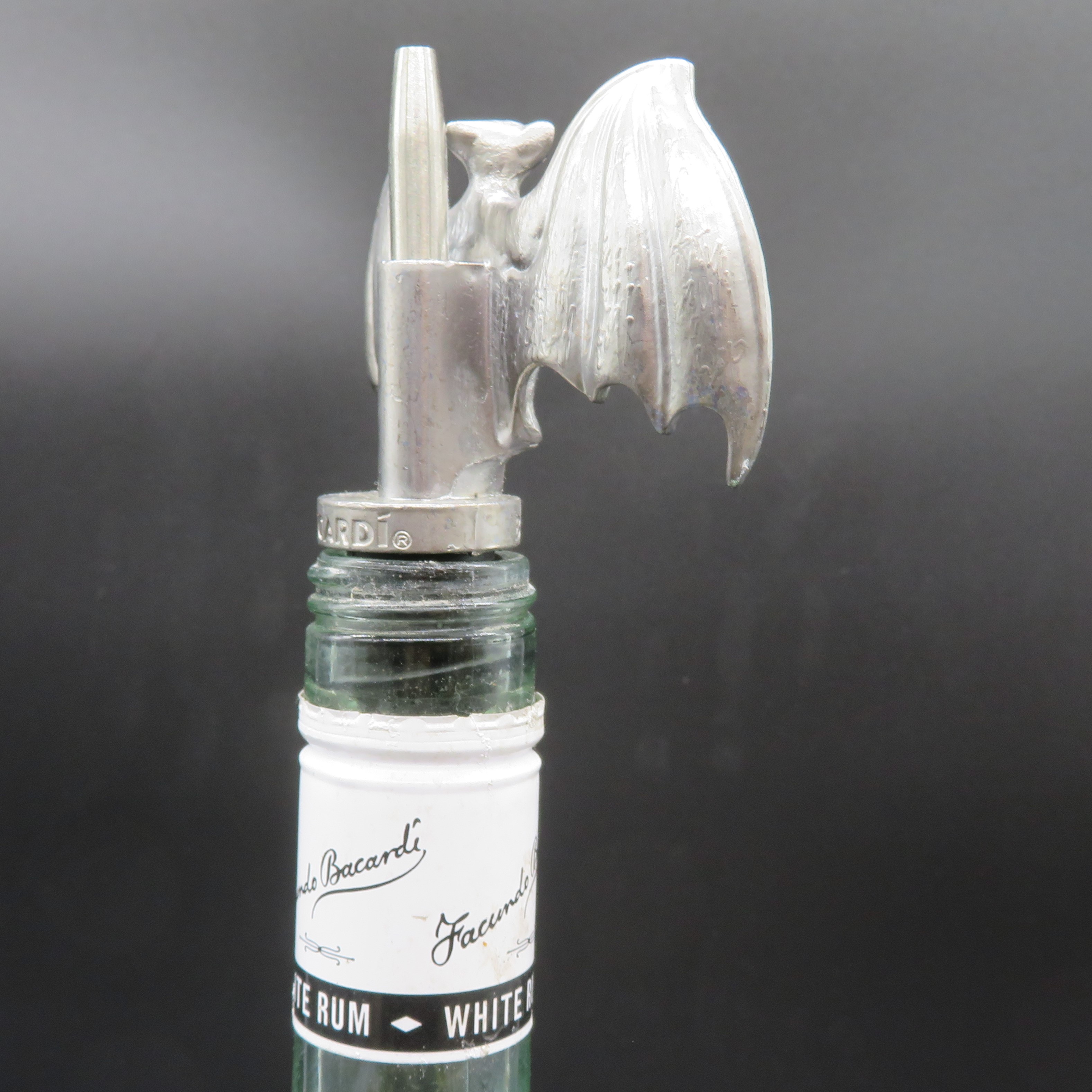

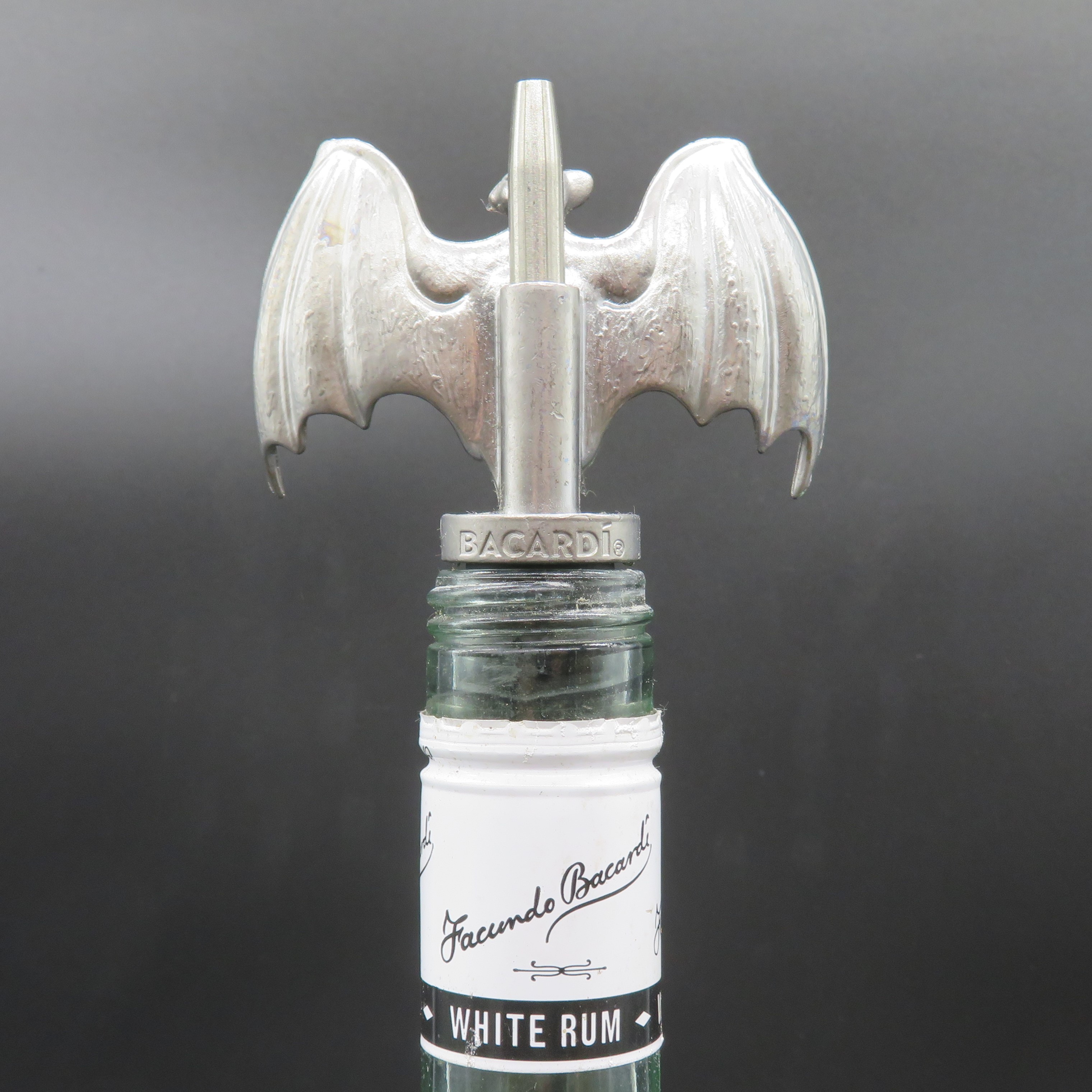

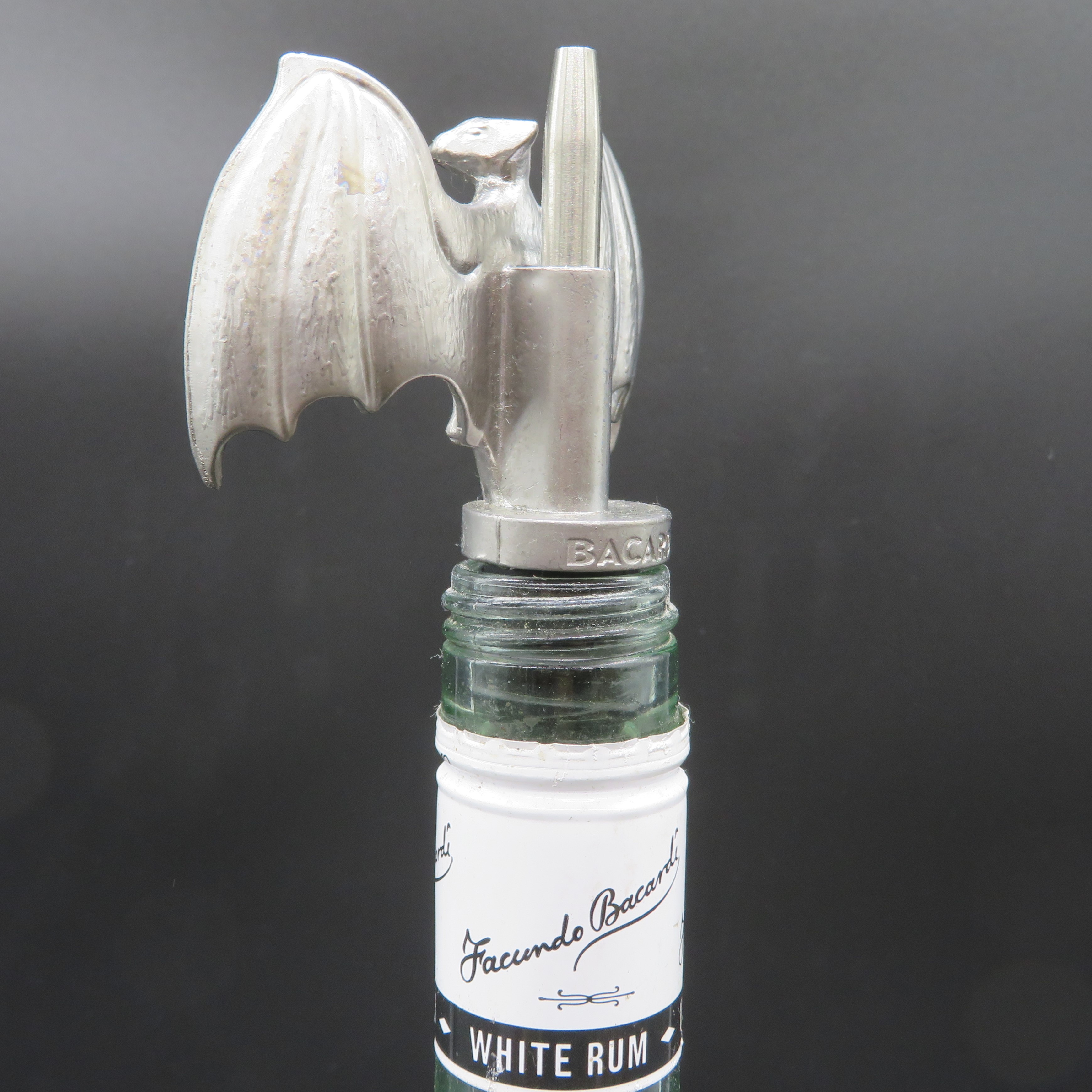

Bacardi Bat metal pourer - Bar spout.
Bacardi Bat metal pourer - Bar spout...
Condition: New. Unused..
Fill level: Not relevant.
Rum still produced: Yes.
Distillery: Bacardi.
Bottler: Original
Bottling series: Accessories.
Bottling Year:
Stated Age:
Cask type:
Strength:
Size:
Colouring:
Bottle code:
Country Origin: U.S.A.
Region: .
Market: Worldwide.
The Bacardi Bat metal pourer carries the same energy as the brand’s iconic emblem: practical bar hardware elevated by a symbol that has defined rum culture for more than a century. This piece blends weighty metal construction with the unmistakable Bacardi bat perched at the top, giving it a presence that feels more like a branded artifact than a simple spout. Designed for steady, controlled pouring, it fits securely into standard bottle necks and adds a touch of old‑school bar craft to any setup. The finish has that slightly industrial sheen you expect from vintage barware, and the bat motif makes it instantly recognisable to anyone who knows their spirits history. Whether used in service or kept as a display item, it stands out as a small but characterful piece of Bacardi heritage — the kind of detail collectors appreciate because it connects everyday bar tools with the legacy of one of rum’s most influential houses.
Distillery History:
Origins & Early Craft (1830–1862)
Bacardi’s story begins with Facundo Bacardí Massó, a Catalan immigrant who arrived in Cuba in 1830 and refused to accept rum as the rough, fiery spirit it was at the time. Over decades of trial and refinement, he developed a method that changed rum forever:
-
A single, cultivated yeast strain from Cuban sugarcane for predictable fermentation.
-
Charcoal filtration to strip harsh notes.
-
A blend of light and heavy distillates for balance.
-
Oak maturation to soften the profile.
On 4 February 1862, he purchased a small distillery in Santiago de Cuba — the birthplace of modern light rum.
The Bat Symbol: Fruit bats lived in the rafters of the distillery. Facundo’s wife, Amalia, recognised their cultural meaning of protection and prosperity, and the bat became the brand’s identity.
El Coco: A lone coconut palm outside the distillery became a company talisman, surviving disasters and symbolising Bacardi’s resilience.
Cuba’s Cocktail Revolution (1880s–1910)
By the late 19th century, Bacardi rum had become the refined spirit of Cuba.
-
1888: Awarded gold at the Barcelona Universal Exposition.
-
1898: The Daiquiri is created using Bacardi rum in the mining town of Daiquirí.
-
1900: American troops in Havana mix Bacardi with Coca‑Cola and lime — the birth of the Cuba Libre.
-
1910: Bacardi becomes Cuba’s first multinational with bottling sites in Barcelona and New York.
Prohibition & Architectural Ambition (1920–1936)
When the U.S. banned alcohol in 1920, Bacardi pivoted brilliantly: Cuba became the escape destination for Americans seeking nightlife and cocktails.
-
1930: The company unveils the Edificio Bacardí in Havana — an Art Deco masterpiece and a symbol of Cuban modernity.
-
Production expands to Mexico and Puerto Rico, securing Bacardi’s future beyond Cuba.
Revolution & Reinvention (1959–1960s)
After the Cuban Revolution, Bacardi’s Cuban assets were seized. But the family had already safeguarded the essentials — trademarks, yeast cultures, and production knowledge — outside the country. This allowed Bacardi to rebuild quickly, eventually relocating its headquarters to Hamilton, Bermuda.
Global Growth & Modern Distilling (1970s–Today)
Bacardi evolved into the world’s largest privately owned spirits group, adding major brands such as Patrón, Grey Goose, Dewar’s, Bombay Sapphire, and Martini & Rossi.
The company’s flagship distillery in Cataño, Puerto Rico — often called the Cathedral of Rum — is now the largest rum distillery on the planet, producing the majority of Bacardi’s global volume. Additional facilities operate in Mexico and India, ensuring worldwide supply.
Key Distillery Sites Today
-
Cataño, Puerto Rico – main production hub and visitor centre.
-
Tultitlán, Mexico – major rum production site.
-
Bermuda – corporate headquarters.
Why Bacardi’s Distillery History Matters
-
It introduced the first truly refined, mixable white rum.
-
It shaped global cocktail culture.
-
It survived natural disasters, Prohibition, and political exile.
-
It remains a family‑owned powerhouse with a global footprint.
© copyright, Tasting World Ltd. England.