


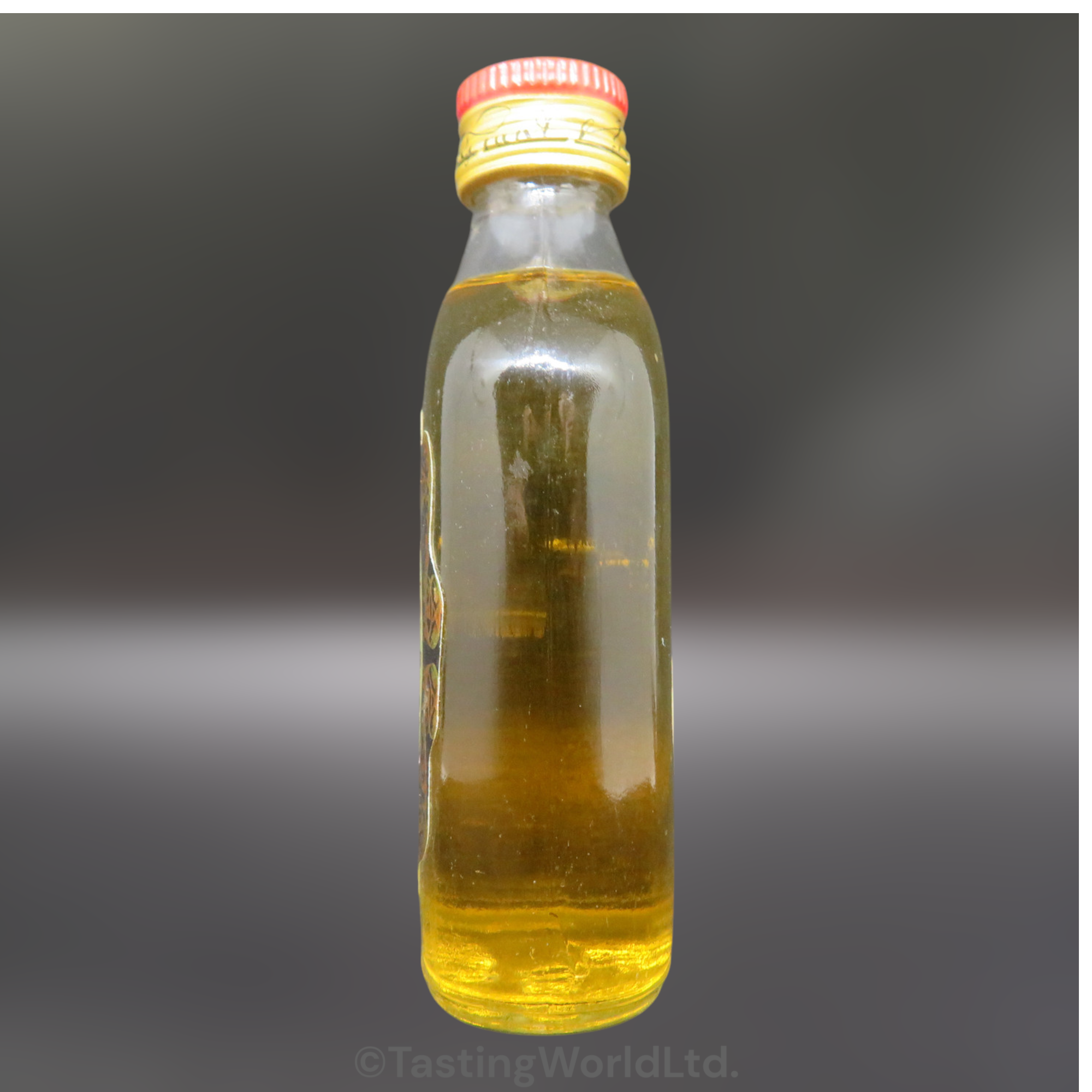
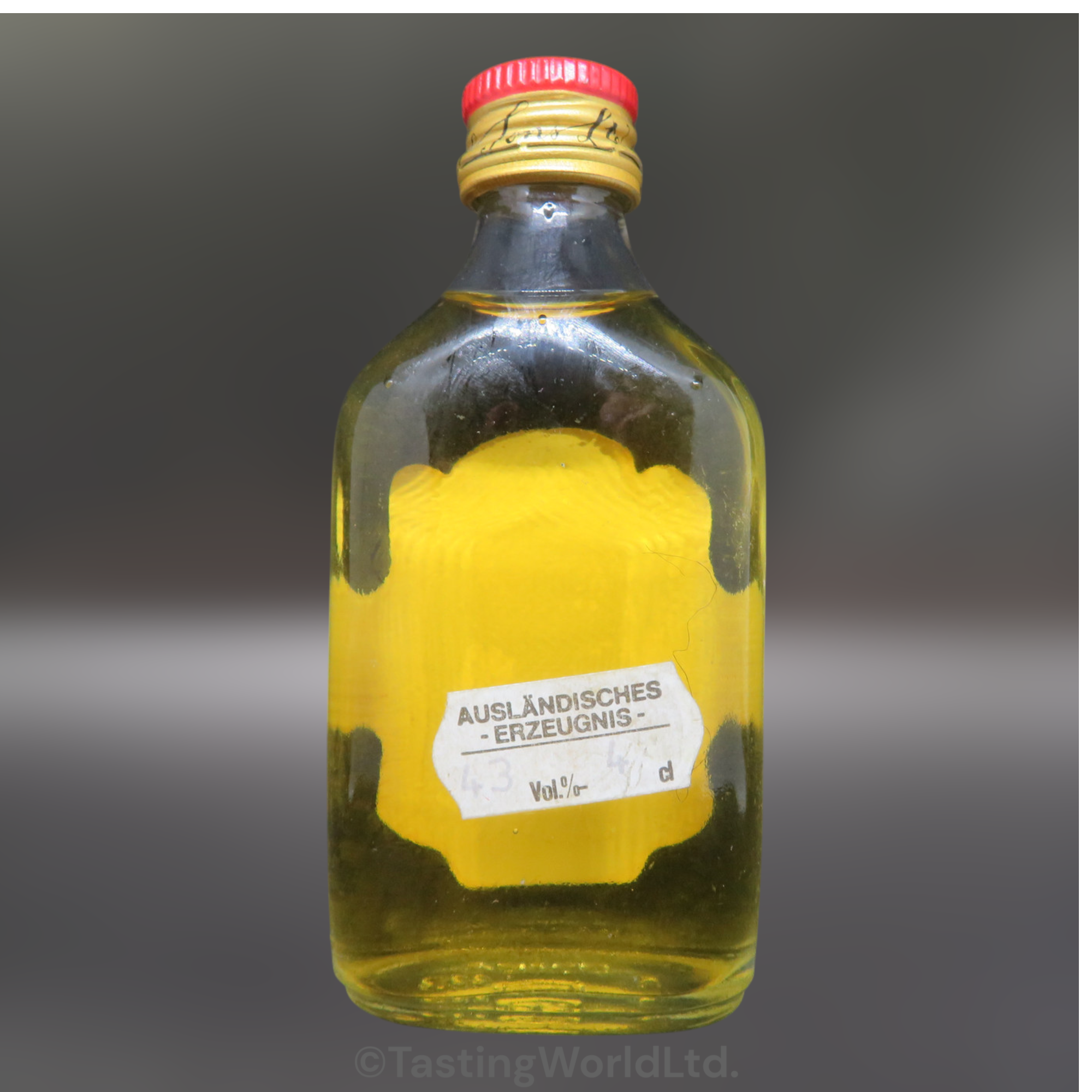
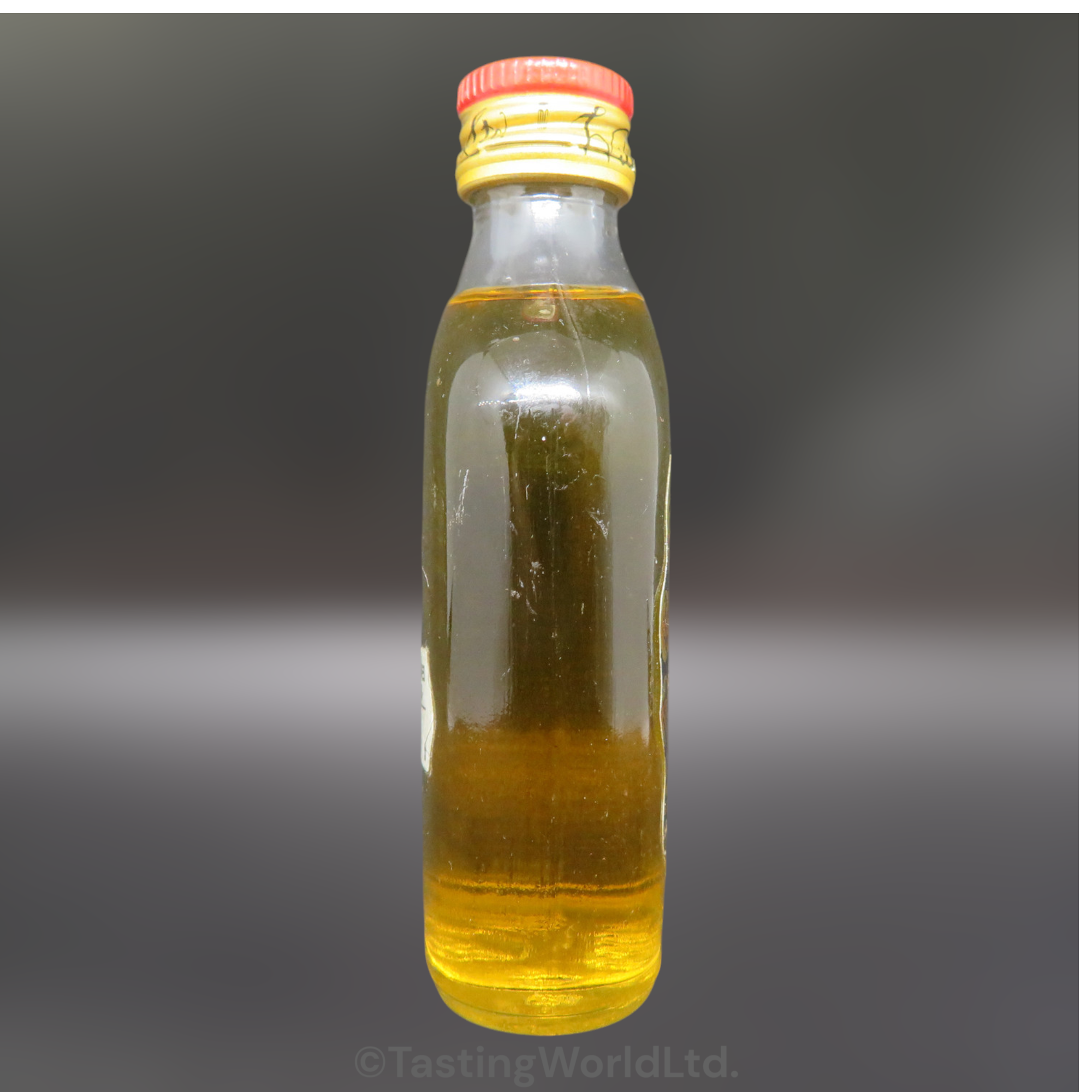
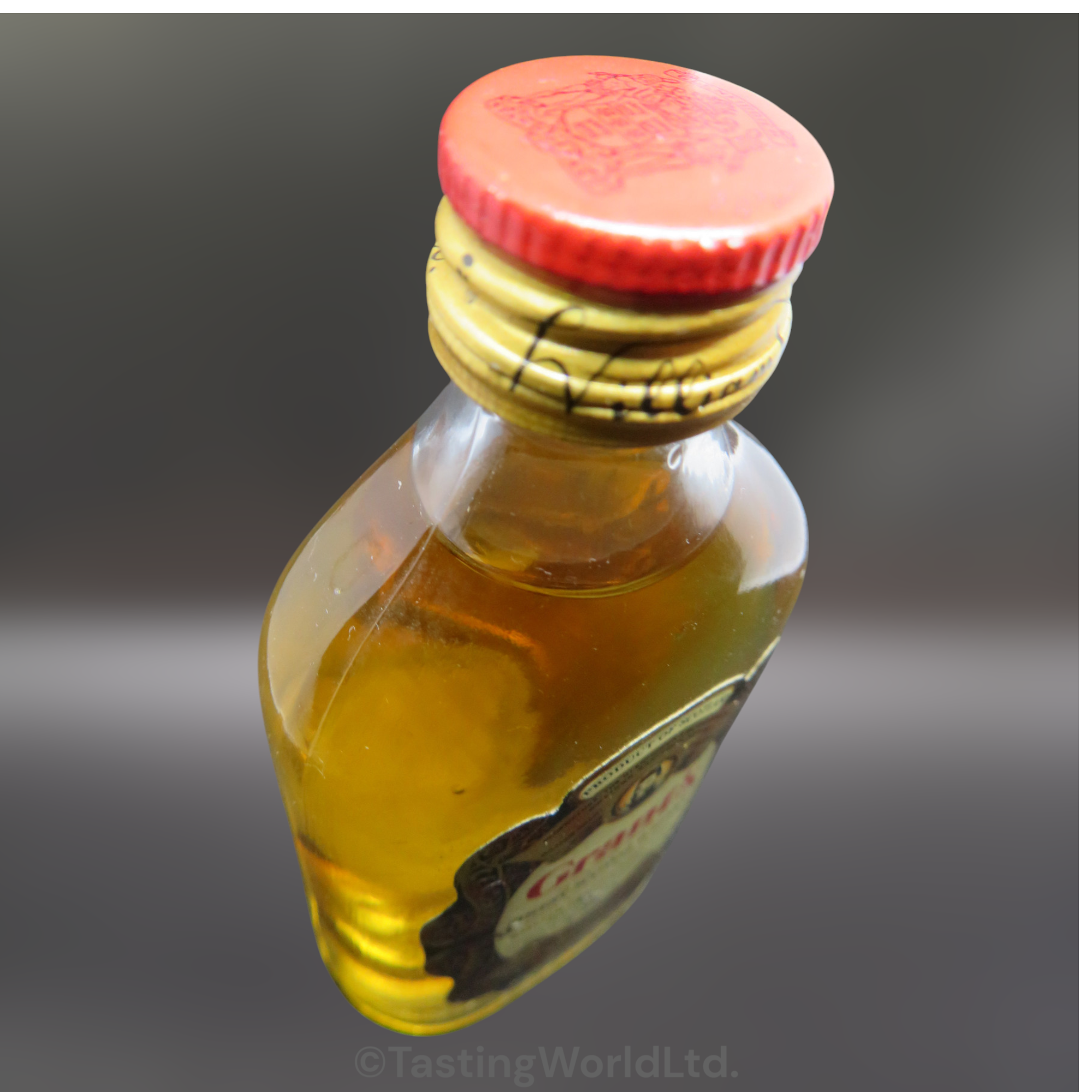
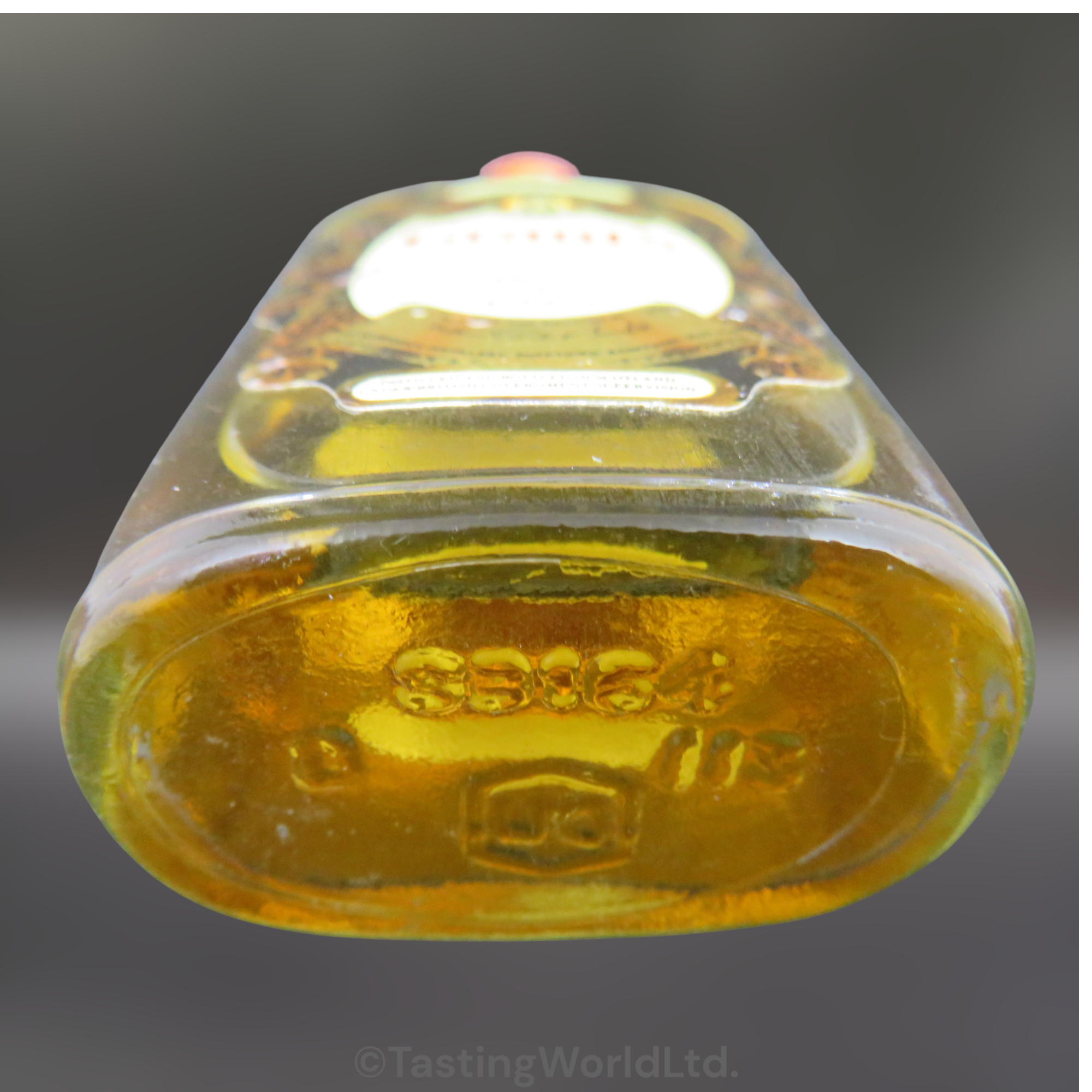


Grant's Stand Fast Finest Scotch Whisky miniature. 46.8ml. 1977-1983
Units in Stock: 1
16,90 € inc. tax
Grant's Stand Fast Finest Scotch Whisky miniature. 46.8ml. 1977-1983...
Condition: As New. Collector. Tasting.
Lost Distillery/Brand: This expression is no longer in production.
Fill level: As New. In the neck.
Whisky still produced: Yes. but not this expression.
Category: Blend.
Distillery: Still producing.
Bottler: William Grant & Sons.
Bottling serie: Stand Fast miniature.
Bottling Year:
Stated Age: 1977-1983.
Casktype: Not stated.
Strength: 86 Proof - 43.0 % Gl.
Size: 46,8 ml.
Colouring: Unknown.
Chill-filtered: Unknown. Probably, as was standard for the era.
Bottle code: None.
Country Origin: Scotland.
Market: Europe - Germany.
Grant’s Blended Scotch Whisky miniature, late 1970s to early 1980s, in the rare flat 4.68 cl glass format. Bottled at 43% vol for export markets, this early small‑format variant predates the later standardisation to 5 cl and carries all the correct period cues. The bottle is sealed with the original red‑gold tin cap, used by Grant’s between roughly 1977 and 1983, confirming authentic early production. The base shows the “UG” glassmaker’s mark inside a hexagon, identifying United Glass and matching the late‑70s/early‑80s miniature molds used for Grant’s export runs.
Label and glass present well for age, with natural minor handling traces typical of minis from this era. Fill level and capsule condition as shown in photos. No age statement, as standard for Grant’s blends of the period. A desirable example for collectors of historic Grant’s bottlings and early export miniature formats, especially in the uncommon 4.68 cl flat glass variant with tin cap and UG hexagon base code.
This example is in collector condition, with a fill level in the neck that is excellent for its age. The miniature is sealed with a red‑gold tin cap, a closure style typical of Grant’s export minis from this era and a reliable indicator of early production. The bottle contains 50 ml of blended Scotch whisky bottled at 43% vol, a slightly higher strength than the later standard of 40%, which further supports its dating to the earlier Stand Fast period. No age statement, cask information, colouring details or filtration notes were provided, which was standard practice for Grant’s minis at the time. Chill‑filtration was almost certainly applied, as it was the norm for blended Scotch during this era. The bottle carries no base code and was produced in Scotland specifically for distribution in Spain. With its Spanish‑market provenance, red‑gold tin cap, discontinued Stand Fast branding and preserved condition, this miniature stands as a desirable collectible for enthusiasts of Grant’s history and vintage blended Scotch whisky.
Tasting notes;
Appearance / Colour; A pale gold hue typical of Grant’s blends from the late 1970s and early 1980s. The colour is light and clear, showing the classic grain‑forward profile of the era.
Nose; Soft grain sweetness with gentle malt notes, followed by honey, vanilla and a touch of light oak. A mild fruitiness emerges with time, suggesting apple skin and faint pear, supported by a subtle cereal warmth.
Palate; Smooth and lightly sweet, opening with soft malt and sweet grain. Vanilla and light caramel develop mid‑palate, accompanied by mild fruit and a gentle spice warmth. The higher 43% strength gives a slightly fuller mouthfeel compared to later 40% Grant’s minis.
Finish; Clean and short to medium in length, with lingering grain sweetness, soft oak and a faint dry spice. The finish remains light, crisp and characteristic of Grant’s house style of the period.
Distillery History:
Grant’s is the blended‑whisky arm of William Grant & Sons, Scotland’s largest independent family‑owned distiller, founded in 1887 by William Grant in Dufftown, Speyside. The company remains 100% family‑owned, now in its fifth generation, operating multiple distilleries including Glenfiddich, Balvenie, Kininvie, Ailsa Bay and Girvan.
Grant’s blends began in 1898, when William Grant started selling his own blended whisky. Early blends carried names like Best Procurable, Hare and Hounds, Liqueur, and Grant’s Shannon. The name that stuck was Standfast, taken from the Grant clan motto “Standfast Craigellachie!”.
By the early 20th century, Grant’s had established a Glasgow sales base, operating a bonded warehouse in the basement of the Gorbals Parish Church. Whisky arrived from Dufftown in casks and was decanted into two‑gallon stoneware jars (“pigs”) for the local trade. Marketing was slow at first—Charles Gordon famously made 181 sales calls before selling his first case.
Grant’s grew steadily, especially in post‑war North America, and in 1957 introduced the iconic triangular bottle, designed by Hans Schleger. This bottle became one of the most recognisable shapes in Scotch whisky.
The brand name Grant’s Standfast remained in use until the mid‑1980s, when it was rebranded as Grant’s Family Reserve.
Stand Fast: Historical Significance
Stand Fast is not just a marketing name—it is the original Grant’s blend identity, dating back to the early 1900s. The brand’s importance was reaffirmed in 2023 when Grant’s undertook a forensic reconstruction of the 1912 Stand Fast blend, using archival ledgers, blending logs, newspaper adverts, and chemical analysis of an authenticated 1912 bottle.
Key historical points:
-
Origin: First bottled in Glasgow in 1912.
-
Blend style: Historically an 8‑year-old blend with a malt‑heavy composition (historically ~72% malt, 28% grain, confirmed by GC‑MS analysis).
-
Production: Early Stand Fast was sold from the Gorbals warehouse in stoneware jars before bottle standardisation.
-
Legacy: The name persisted until the mid‑1980s, after which “Family Reserve” replaced it.
For collectors, Stand Fast minis represent the last era before the brand identity changed.
Grant’s Triangular Bottle (1957–present)
The triangular bottle, introduced in 1957, is one of the most important design elements in Grant’s history. Designed by Hans Schleger, it symbolised modernity and helped Grant’s stand out globally.
Miniatures followed the same design language:
-
Triangular glass minis appear from the late 1960s onward.
-
Tin caps (gold or red‑gold) were used until the early 1980s.
-
Plastic/poly caps replaced tin caps from mid‑1980s onward.
-
Base codes (UG hexagon, etc.) help date production to specific glass manufacturers and eras.
Miniature Production History (Grant’s)
Grant’s miniature production evolved in distinct phases:
1960s–early 1970s
-
Early glass minis, often 1 oz or 4.7 cl formats.
-
Labels vary widely; export markets received different strengths.
Late 1970s–early 1980s
-
Strength: 43% vol for many export markets (Spain, Italy, Germany).
-
Caps: Red‑gold or gold tin caps.
-
Glass:
-
Flat 4.68 cl bottles
-
Triangular minis
-
UG (United Glass) hexagon base marks (late‑70s/early‑80s)
-
-
Branding: “Grant’s Stand Fast” still used until mid‑1980s.
-
Chill‑filtration: Standard for blends of the era.
-
Colour: Pale gold, grain‑forward profile.
Mid‑1980s onward
-
Transition to Family Reserve branding.
-
Switch to 40% vol standard strength.
-
Plastic caps replace tin.
-
5 cl becomes the universal miniature size.
Grant’s in the Wider Context of William Grant & Sons
William Grant & Sons is notable for:
-
Remaining independent while competitors consolidated into multinational groups.
-
Operating multiple distilleries and maintaining vertical integration (maltings, cooperages, R&D).
-
Pioneering sustainability, achieving 100% renewable electricity across Scottish sites in 2022.
-
Training more master blenders and stillmen than any other distiller through its apprenticeship programme.
Product Code: Gr sf m4.68 g
Brand: Grant's
Product Condition: New
weight: 102.0g
No Reviews Posted Yet - be the first!