


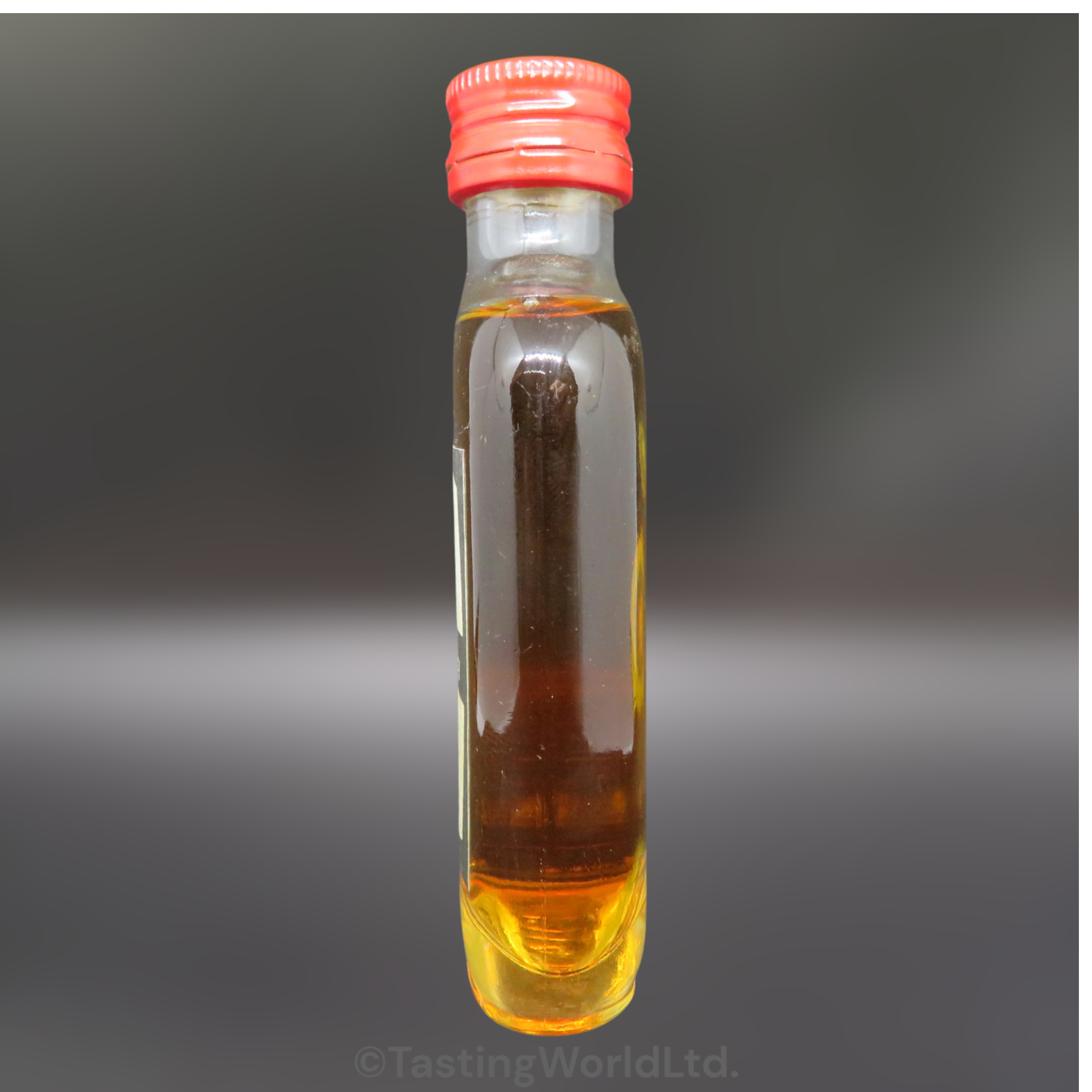

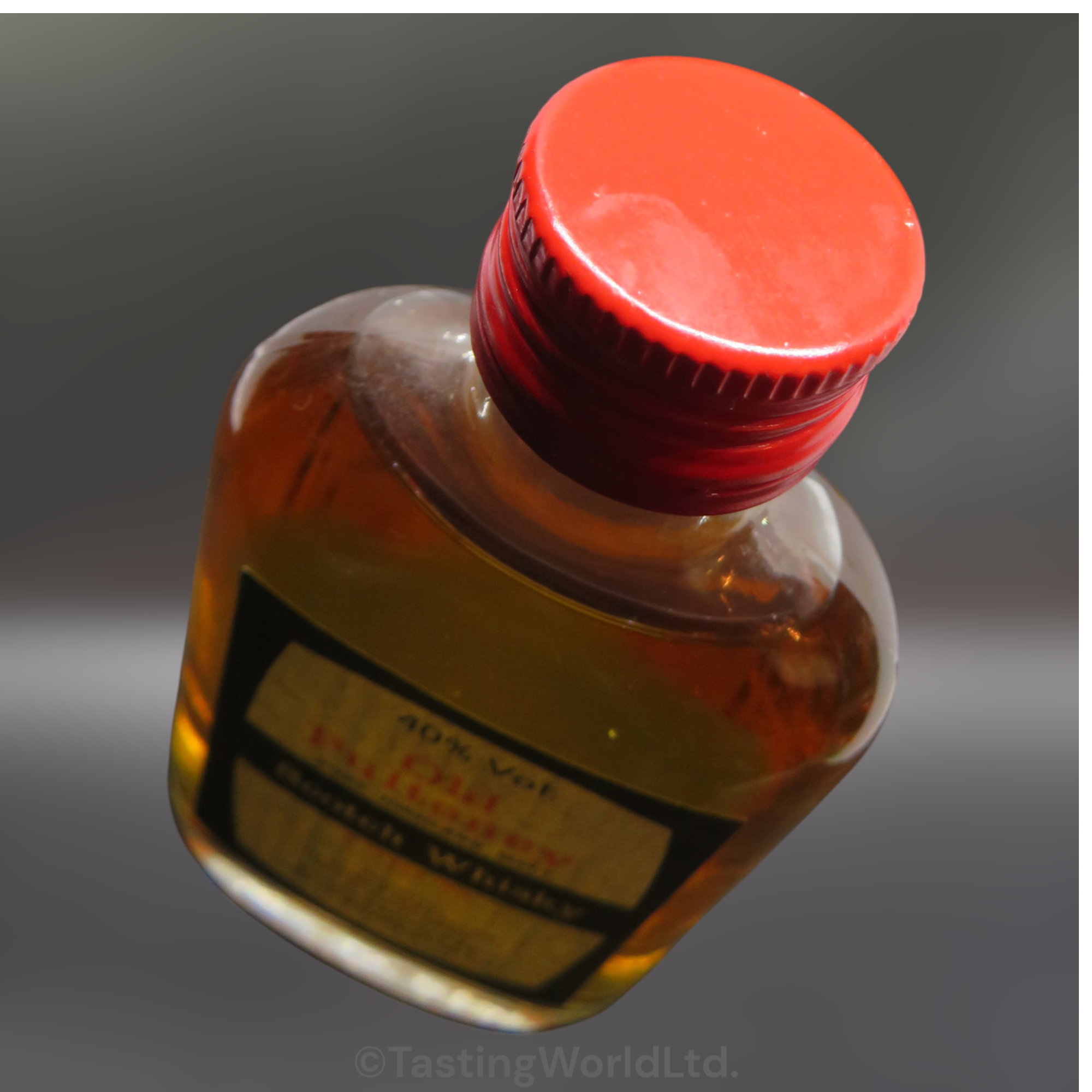

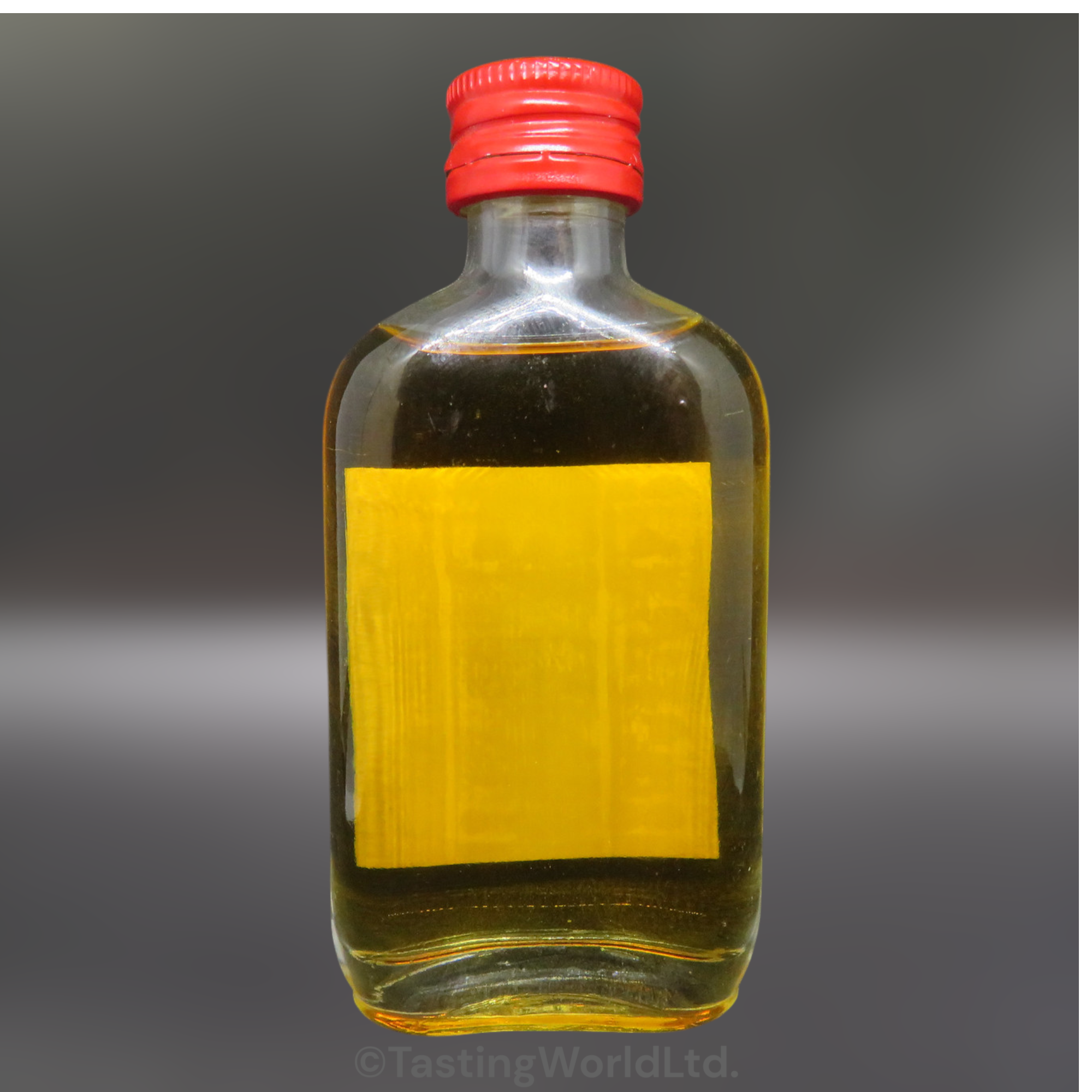

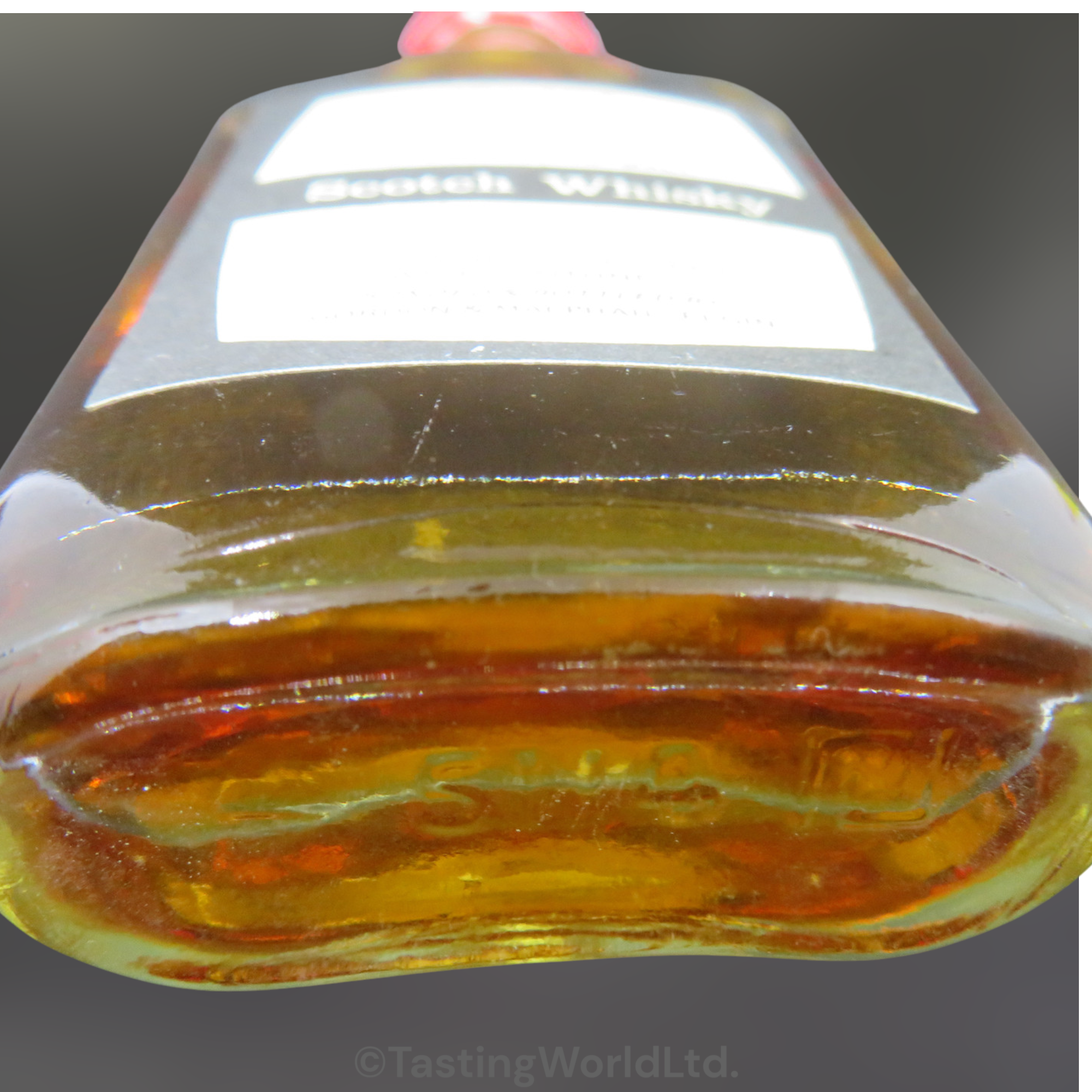

Old Pulteney 8 year Pure Highland Malt miniature 1970s
Old Pulteney 8 year Pure Highland Malt miniature 1970s...
This bottle was part of a private collection/general circulation and can have natural signs of wear!!!
Condition: Tasting. Collector-Please note as this is a vintage/rare/limited edition bottle, conditions of bottle/label and liquid level can vary - Some years can vary and as estimations only (example: estimated 1970s/80s).
Lost Distillery/Brand: No.
Fill level: On the shoulder.
Whisky still produced: Yes.
Category: Pure malt.
Distillery: Still producing.
Bottler: Gordon & MacPhail.
Bottling series: Miniature.
Vintage: Not stated.
Bottling Year: 1970s.
Stated Age: 8 years old.
Cask type: Refill ex‑bourbon barrels (American oak).
Strength: 40.0% Vol.
Size: Not stated, 47-50 ml.
Colouring: Probably yes, it was usual for this era.
Chill-filtered: Unknown.
Bottle code: None.
Country Origin: Scotland.
Region: Highland.
Market: Worldwide.
This is a 1970s distillery‑bottled Old Pulteney 8 Year Old Pure Highland Malt miniature, produced during the era when Pulteney’s whisky was still primarily destined for blends but already carried the distillery’s unmistakable coastal character. The bottle comes from private circulation and may show natural signs of age, consistent with vintage minis from this period. As with all older releases, variations in label condition, capsule wear, and fill level are normal; the fill here sits on the shoulder.
The whisky itself is a classic example of 1970s Pulteney: matured mainly in refill ex‑bourbon barrels, giving it a pale colour, gentle vanilla sweetness and a clean, mineral profile. The spirit style of this era is lean, waxy and slightly briny, shaped by worm‑tub condensation and Wick’s maritime environment. At 40% vol and approximately 47–50 ml, this miniature represents an authentic snapshot of Old Pulteney’s traditional Highland coastal style before modern branding and cask management practices.
Distillery bottling, Highland region, worldwide market release. Vintage not stated, but bottling dates to the 1970s. Colouring was common at the time; chill‑filtration is unknown. No bottle code present.
Tasting notes;
Appearance/colour; Bronze.
Nose: opens with a clean coastal freshness, a gentle briny lift that immediately signals Wick’s maritime style. Light citrus notes—lemon peel and a touch of grapefruit—sit alongside green apple and soft barley sweetness. There is a faint waxy undertone, typical of Old Pulteney’s worm‑tub distillation, and a mineral edge reminiscent of chalk and wet stone. Vanilla and pale honey drift in quietly from the refill‑bourbon cask, with just the slightest suggestion of nuttiness if any refill‑sherry wood was part of the batch.
Palate: the whisky is light to medium in body yet carries a subtle oiliness. The citrus becomes sharper, leaning toward lemon rind and grapefruit pith, balanced by malt biscuit, gentle vanilla and a clean oak presence. A whisper of sea salt runs through the mid‑palate, never dominant but unmistakably coastal. The waxy texture persists, giving the spirit an old‑school Highland firmness, while a dry herbal note—heather, hay, a touch of pepper—adds structure.
Finish: is moderately long, drying and mineral, with lingering barley sugar, lemon zest and a soft waxy echo. A final trace of coastal saltiness ties it back to its northern origins, leaving a crisp, clean impression that is very much in line with 1970s Pulteney.
Distillery History:
Old Pulteney came to life in 1826, when James Henderson established a distillery in the newly built district of Pulteneytown, Wick. The area had been engineered by Thomas Telford specifically to support the explosive growth of the herring industry, and Henderson placed his distillery right in the middle of that maritime economy.
Wick’s harbour was one of Europe’s busiest fishing centres throughout the 19th century. During peak decades, fleets landed millions of barrels of herring, and the town’s rhythm was dictated by the sea. Whisky production slotted neatly into this cycle: fishermen distilled in winter, fished in summer, and the distillery’s output travelled by boat because roads were almost nonexistent.
The spirit matured in warehouses only a few hundred metres from the North Sea, where constant salt spray and fierce winds shaped the whisky’s character long before “coastal style” became a marketing term.
A Distillery Built for Harsh Weather
The early buildings were constructed from Caithness flagstone, a material chosen because it could withstand relentless storms. Thick walls, low roofs, and simple layouts reflected the practical needs of a remote industrial site. Over decades, the copper and stone absorbed the coastal environment, contributing to the distillery’s distinctive, weighty spirit.
In difficult years, equipment was occasionally repurposed for fish‑processing tasks — a reminder of how tightly whisky and fishing were intertwined in Wick’s economy.
Ownership Turbulence, Local Prohibition & Shutdown (1900–1951)
The early 20th century brought rapid changes:
-
1920: Sold to James Watson & Co.
-
1923: Passed to Buchanan‑Dewar
-
1925: Absorbed into DCL
Then came Wick’s extraordinary chapter: local prohibition. From 1922 to 1947, alcohol sales were banned within the town. The distillery could produce whisky, but it couldn’t sell it locally — a bizarre situation that eventually forced Old Pulteney to close in 1930.
It remained silent for more than two decades.
When prohibition finally ended, solicitor Robert Cumming purchased and revived the distillery in 1951, preserving traditional features such as worm‑tub condensers, which still give Old Pulteney its oily, muscular texture.
Rebuilds, Modernisation & Blending Era (1950s–1990s)
Under Hiram Walker (from 1955), the distillery underwent major reconstruction.
-
The floor maltings closed in 1959
-
New equipment was installed
-
Most spirit went into blends, especially Ballantine’s
In 1961, Allied Breweries took over, maintaining steady production but offering few official single malt bottlings. Independent bottlers like Gordon & MacPhail kept the name alive among enthusiasts.
Rise of the Maritime Malt (1995–Today)
A major turning point came in 1995, when Inver House Distillers acquired Old Pulteney and repositioned it as a distinctive northern coastal malt.
The release of Old Pulteney 12 Year Old in 1997 established the brand’s modern identity: waxy texture, sea‑air influence, and a subtle briny edge that genuinely reflects Wick’s environment.
Further upgrades followed:
-
2014: Replacement of the old cast‑iron mash tun with a modern semi‑lauter system
-
2023: Sustainability improvements without sacrificing traditional worm‑tub distillation
-
2023: Release of the distillery’s oldest whisky to date, the 45‑year‑old Bow Wave
Production Style & Technical Identity
-
Water: Loch Hempriggs / Tain Burn
-
Stills: One wash, one spirit — both unusually shaped
-
Condensation: Classic worm tubs, producing a dense, weighty spirit
-
Warehousing: Dunnage warehouses close to the sea, high humidity, salt aerosols
-
Output: Roughly 1–1.8 million litres annually depending on year
Cultural & Regional Significance
Old Pulteney’s character is inseparable from Wick’s history:
-
The herring boom
-
Maritime labour culture
-
Isolation of Scotland’s far north
-
The prohibition saga
-
Coastal maturation conditions
It remains one of the most recognisable Highland malts, not because of size or marketing, but because its environment genuinely shapes its whisky.
© copyright, Tasting World Ltd. England.