


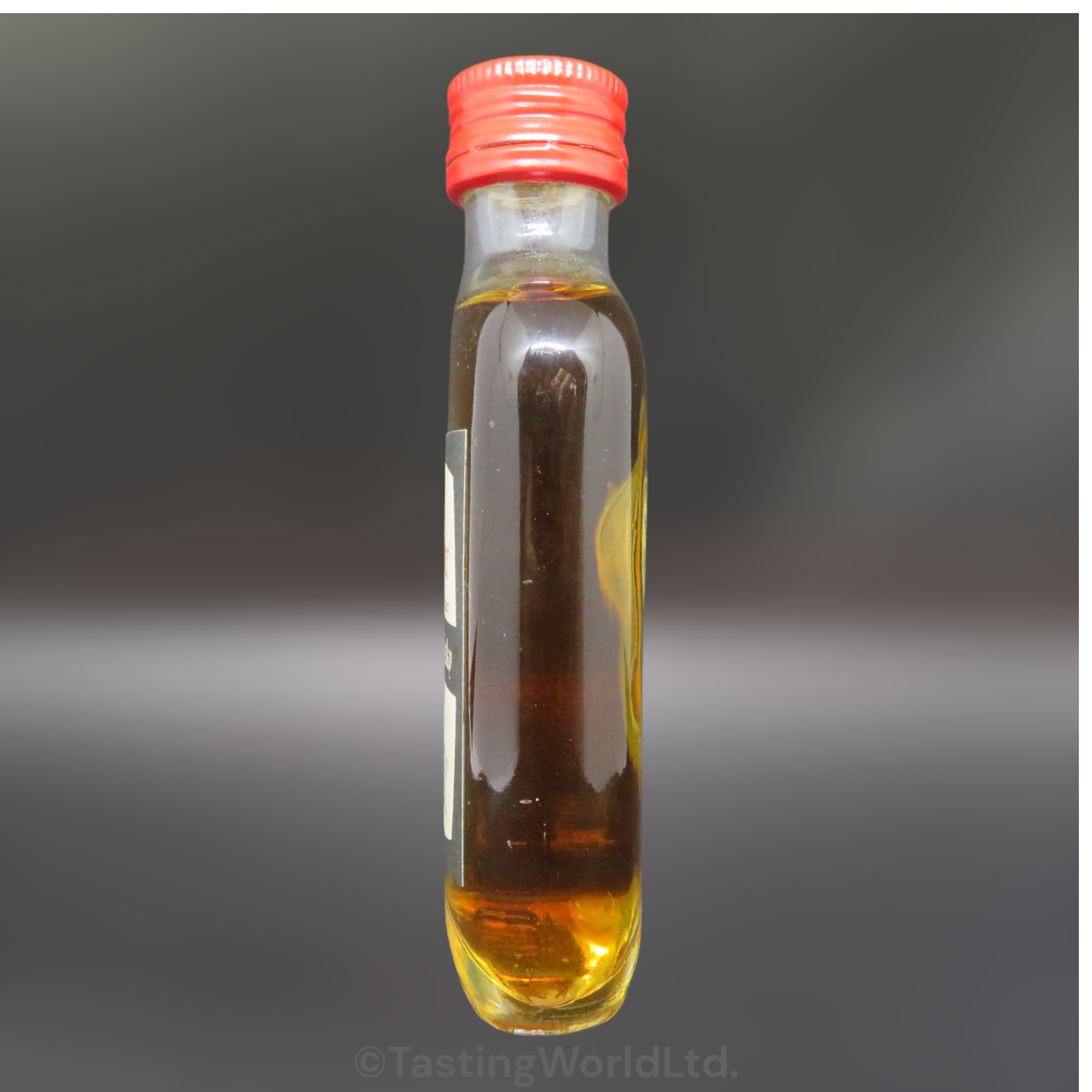
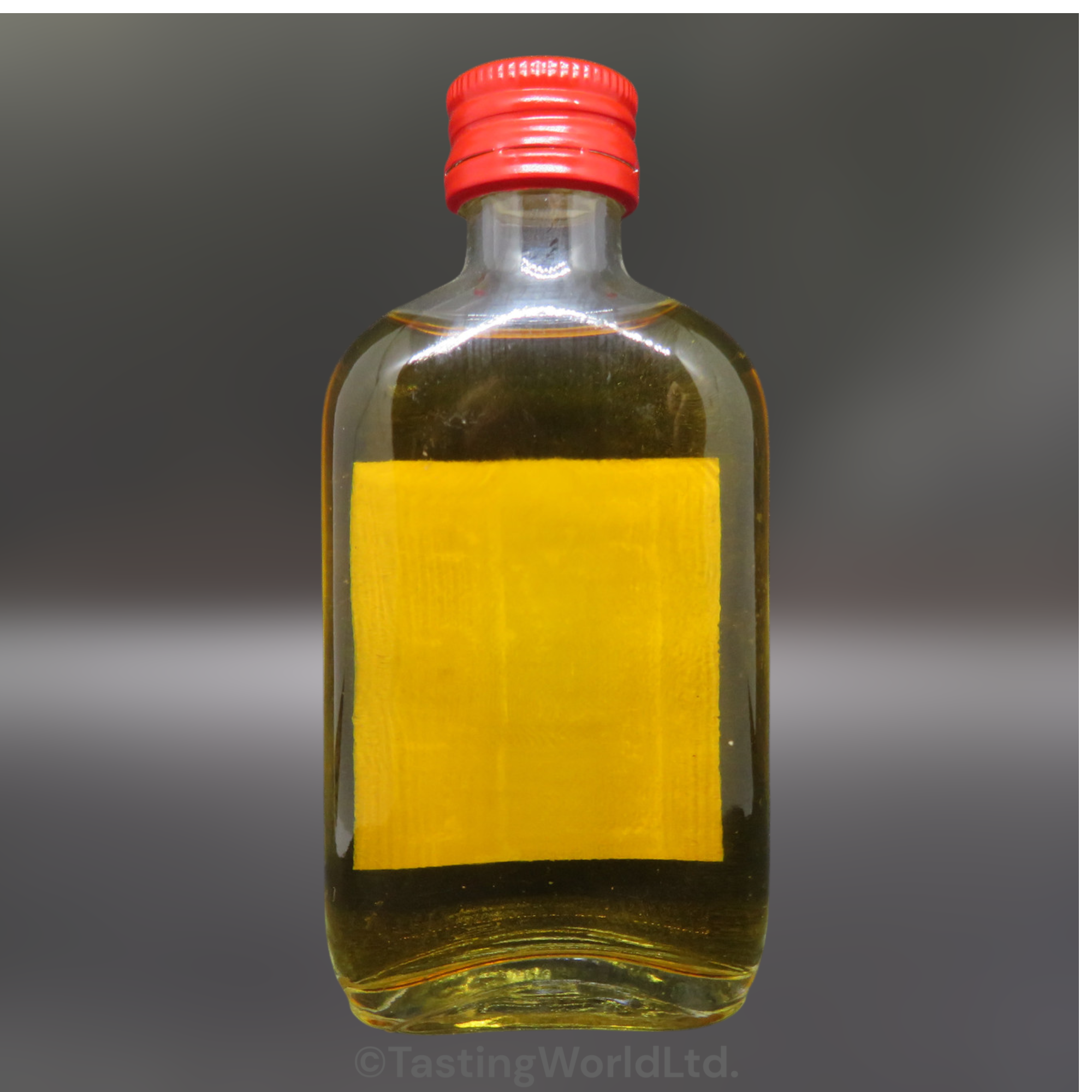
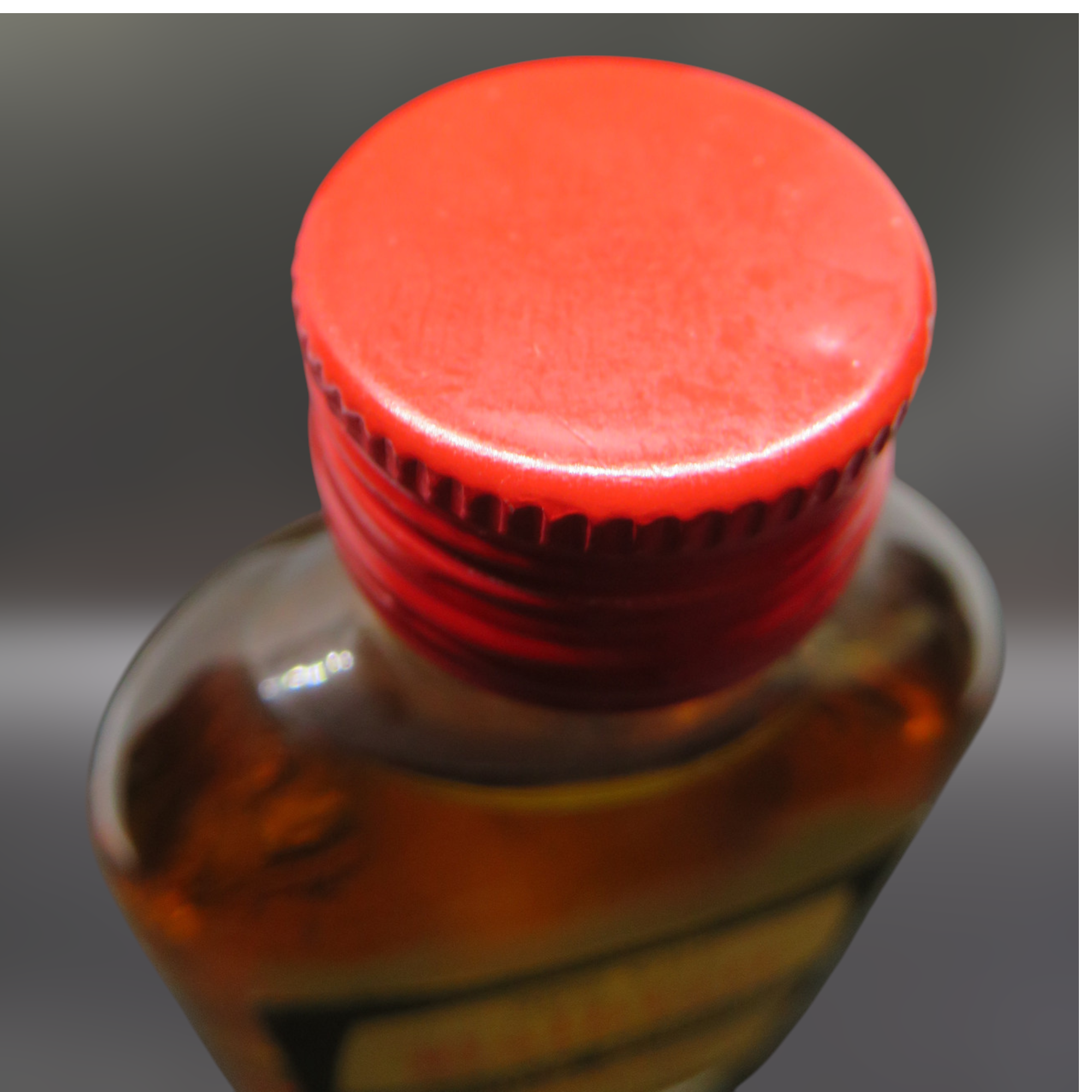
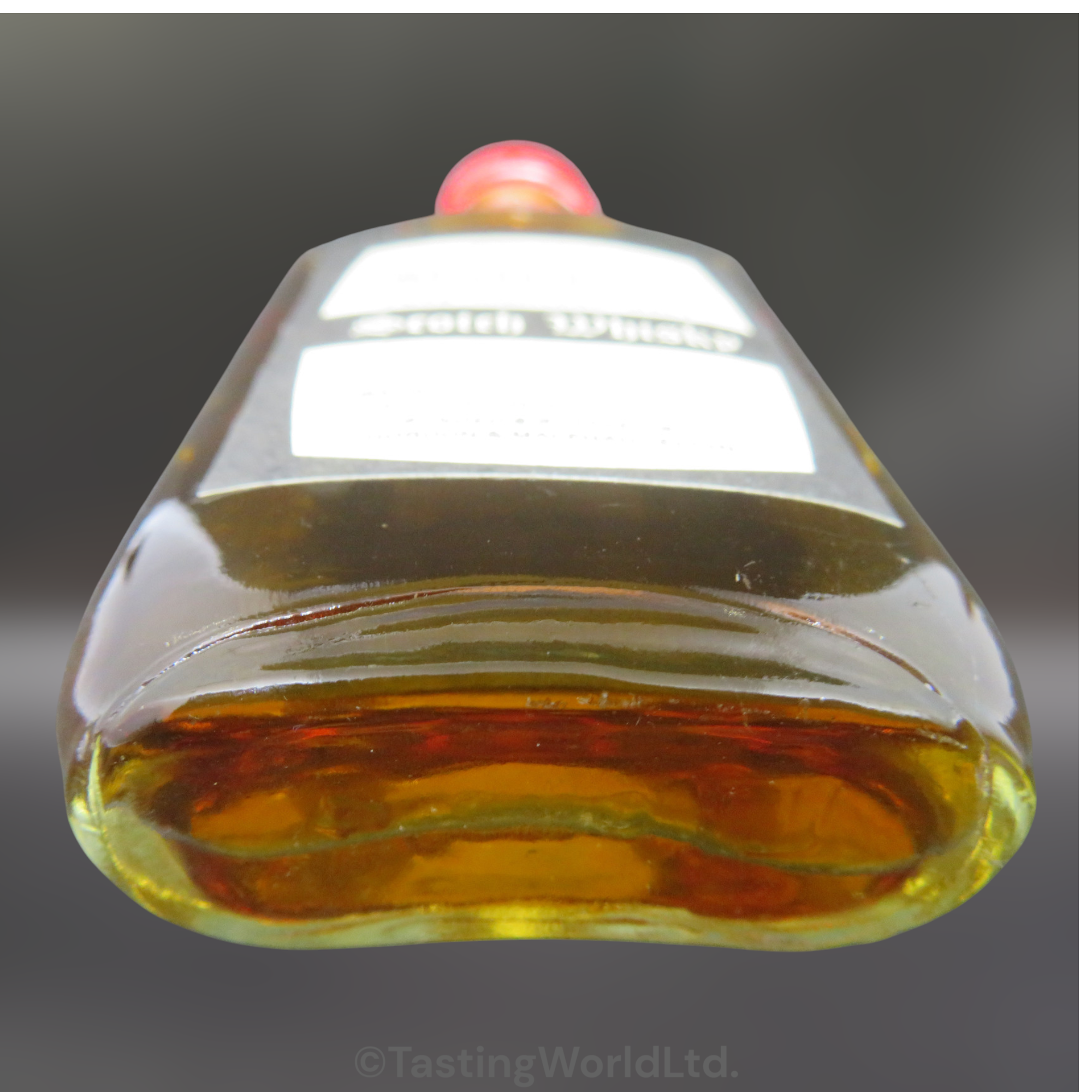


Balblair 10 year Pure Highland Malt miniature 1970s
Units in Stock: 1
13,90 € inc. tax
Balblair 10 year Pure Highland Malt miniature 1970s...
This bottle was part of a private collection/general circulation and can have natural signs of wear!!!
Condition: Tasting. Collector-Please note as this is a vintage/rare/limited edition bottle, conditions of bottle/label and liquid level can vary - Some years can vary and as estimations only (example: estimated 1970s/80s).
Lost Distillery/Brand: No.
Fill level: On the shoulder.
Whisky still produced: Yes.
Category: Pure malt.
Distillery: Still producing.
Bottler: Gordon & MacPhail.
Bottling series: Pure Highland Malt.
Vintage: Not stated.
Bottling Year: 1970s.
Stated Age: 10 years old.
Cask type: Refill ex‑bourbon barrels (American oak).
Strength: 40.0% Vol.
Size: Not stated, 47-50 ml.
Colouring: Probably yes, it was usual for this era.
Chill-filtered: Unknown.
Bottle code: None.
Country Origin: Scotland.
Region: Highland.
Market: Worldwide.
This is a 1970s Gordon & MacPhail bottling of Balblair 10 Year Old Pure Highland Malt, presented in the classic miniature format used during that era. The bottle comes from private circulation and may show natural signs of age, which is normal for vintage minis. As with all older releases, variations in label condition, capsule wear and fill level can occur; this example sits on the shoulder.
The whisky inside reflects Balblair’s traditional Highland style of the 1970s: bright, lightly fruity, and shaped by maturation in refill ex‑bourbon barrels, which were standard for the distillery at the time. Expect a pale colour, gentle vanilla sweetness, citrus notes and a clean barley character. Bottled at 40% vol, with an estimated volume of 47–50 ml, this miniature captures the distillery’s profile long before modern branding and age‑statement ranges.
Gordon & MacPhail acted as bottler for this release, part of their long‑running Pure Highland Malt series. No bottle code is present, colouring was common during the period, and chill‑filtration is not documented. Distillery still active; Highland region; worldwide market.
Tasting notes;
Appearance/colour; Gold.
Nose: opens with bright Highland fruitiness: lemon peel, soft apple and a touch of pear, all carried by a clean barley sweetness typical of Balblair’s 1970s spirit. There is a gentle vanilla note from the refill‑bourbon wood, alongside light honey and a faint floral lift. A subtle waxy edge appears with time, joined by a mineral dryness that hints at the distillery’s coastal setting.
Palate: this whisky is light yet expressive, showing citrus oils, barley sugar and a soft creamy vanilla. The refill‑bourbon cask keeps the profile clean and pale, allowing Balblair’s natural fruit character to shine. A mild herbal dryness develops—heather, hay, a touch of white pepper—balanced by a smooth, lightly oily texture that reflects traditional slow distillation of the era.
Finish: is medium in length, crisp and drying, with lingering lemon zest, honeyed malt and a gentle mineral note. A final whisper of orchard fruit and vanilla fades slowly, leaving a clean, classic 1970s Highland impression.
Distillery History:
Balblair stands among Scotland’s oldest active distilleries, with its official founding recorded in 1790. The site at Edderton, overlooking the Dornoch Firth, had been associated with small‑scale local distilling long before formal registration, giving Balblair a heritage that stretches deeper than most Highland producers. The Ross family, who established the distillery, maintained operations for more than a century, leaving behind one of the most complete early archives in Scotch whisky — including production ledgers dating back to 1800, a rarity in the industry.
By the late 19th century, Balblair entered a new phase. In 1894, the distillery was rebuilt and relocated slightly north to take advantage of the nearby railway line. This redevelopment was overseen by the renowned distillery architect Charles C. Doig, whose pagoda‑roof designs became iconic across Scotland. Despite the move, Balblair continued to draw water from the Allt Dearg burn, a source that remains central to its spirit character today.
The early 20th century brought interruptions. Economic pressures and wartime restrictions led to periods of closure, including extended silence in the 1910s and 1930s. A revival came in 1948, when businessman Robert Cumming purchased the distillery and restored production. Under his ownership, Balblair expanded and modernised, eventually passing into the hands of Hiram Walker in 1970, later part of Allied Domecq. Through these decades, Balblair’s spirit was used extensively in blends, though its distinctive Highland fruitiness remained recognisable.
A major turning point arrived in 1996, when Inver House Distillers acquired Balblair. This marked the beginning of its modern identity as a single malt–focused distillery. Balblair became known for its unusual decision to release whisky by vintage year rather than age statement, emphasising the individuality of each distillation season. This approach lasted until 2019, when the distillery introduced a structured age‑statement range (12, 15, 18, 21, 25 years) to offer greater consistency while preserving its signature style.
Today, Balblair produces a bright, fruit‑driven Highland malt shaped by clear wort, long fermentation, and slow distillation. Its character balances citrus, orchard fruit, honey and gentle coastal freshness — a profile rooted in centuries of tradition. The distillery has also embraced modern efficiency, including thermal vapour recovery and seven‑day production schedules, bringing output to around 1.8 million litres annually.
Balblair’s cultural footprint is notable too. Its historic buildings and scenic location made it a natural choice for film, appearing prominently in The Angels’ Share (2012). A visitor centre was later opened in the old malting building, reinforcing Balblair’s place as both a working distillery and a living piece of Highland heritage.
© copyright, Tasting World Ltd. England.
Product Code: BBL sm m0 70s
Brand: Balblair
Product Condition: New
weight: 142.0g
No Reviews Posted Yet - be the first!